Understanding PET-CT Scans: A Comprehensive Guide
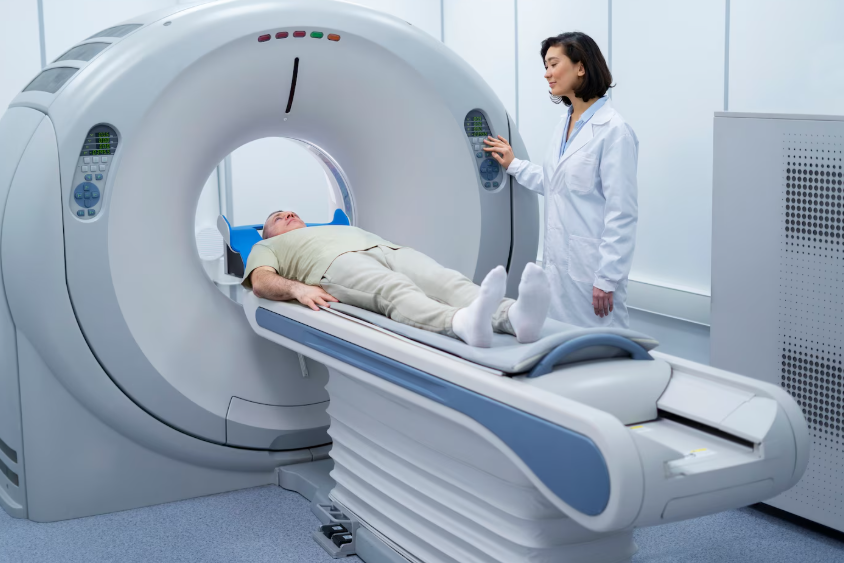
With Dr. Shivam Vatsal Agarwal
Accurate diagnosis and precise staging are the foundation of effective cancer treatment. Among modern imaging techniques, the PET-CT scan has emerged as one of the most powerful tools in oncology. It combines functional and anatomical imaging, helping doctors detect cancer early, assess its spread, and evaluate treatment response with high accuracy.
In this comprehensive guide, Dr. Shivam Vatsal Agarwal, a leading cancer specialist, explains what a PET-CT scan is, how it works, and when it is recommended.
What Is a PET-CT Scan?
A PET-CT scan combines two imaging technologies:
- PET (Positron Emission Tomography): Shows metabolic activity of cells
- CT (Computed Tomography): Provides detailed images of organs and structures
Together, PET-CT offers both functional and structural information, allowing doctors to identify abnormal tissue that may not yet show visible changes on CT or MRI alone.
How Does a PET-CT Scan Work?
Before the scan, a small amount of a radioactive tracer—commonly FDG (fluorodeoxyglucose)—is injected into the bloodstream. Cancer cells, due to their higher metabolic activity, absorb more of this tracer.
During the scan:
- PET detects areas of increased metabolic activity
- CT maps the exact location of these areas in the body
The result is a highly detailed image that helps pinpoint disease accurately.
Why Is PET-CT Important in Cancer Care?
According to Dr. Shivam Vatsal Agarwal, PET-CT scans play a critical role at multiple stages of cancer management:
1. Early Cancer Detection
PET-CT can detect cancer at an early stage, sometimes even before structural changes appear.
2. Cancer Staging
It helps determine:
- Tumor size
- Lymph node involvement
- Distant metastasis
This information is essential for selecting the right treatment plan.
3. Treatment Planning
By identifying the exact extent of disease, PET-CT assists in:
- Surgical planning
- Radiation therapy targeting
- Chemotherapy decisions
4. Monitoring Treatment Response
PET-CT can show how well the cancer is responding to treatment, often earlier than conventional scans.
5. Detecting Recurrence
It is highly effective in identifying cancer recurrence after treatment.
Conditions Commonly Evaluated Using PET-CT
PET-CT scans are widely used in:
- Breast cancer
- Lung cancer
- Lymphoma
- Head and neck cancers
- Colorectal cancer
- Gynecological cancers
- Prostate cancer (specific tracers)
What to Expect During a PET-CT Scan
- Preparation: Fasting for 4–6 hours may be required
- Tracer Injection: A painless injection followed by a resting period
- Scan Time: Typically 20–30 minutes
- Post-Scan: You can resume normal activities shortly after
The procedure is safe, non-invasive, and generally well tolerated.
Is PET-CT Scan Safe?
PET-CT scans use low levels of radiation and are considered safe when performed under medical supervision. Dr. Shivam Vatsal Agarwal recommends PET-CT only when clinically necessary, ensuring the benefits far outweigh the risks.
PET-CT vs CT or MRI: What’s the Difference?
| Feature | PET-CT | CT/MRI |
| Detects metabolic activity | ✅ | ❌ |
| Shows anatomical detail | ✅ | ✅ |
| Early cancer detection | ✅ | Limited |
| Treatment response assessment | Excellent | Moderate |
Expert Insight from Dr. Shivam Vatsal Agarwal
“PET-CT scans have revolutionized cancer diagnosis and management. They allow us to see not just where a tumor is, but how active it is—helping us make more accurate, personalized treatment decisions for our patients.”
When Should You Consider a PET-CT Scan?
Your doctor may recommend a PET-CT if:
- Cancer is suspected but not confirmed
- Staging is required before treatment
- You are undergoing or have completed cancer therapy
- There is concern about recurrence
A PET-CT scan is a powerful diagnostic tool that plays a vital role in modern cancer care. By combining metabolic and anatomical imaging, it enables accurate diagnosis, precise staging, and effective treatment monitoring.
If you or a loved one requires expert guidance on cancer diagnosis or imaging, consult Dr. Shivam Vatsal Agarwal for personalized, evidence-based cancer care.
📞 Book a Consultation
For expert evaluation and comprehensive cancer management, contact Dr. Shivam Vatsal Agarwal today.


