Colon Cancer Symptoms and Early Detection: Everything You Need to Know
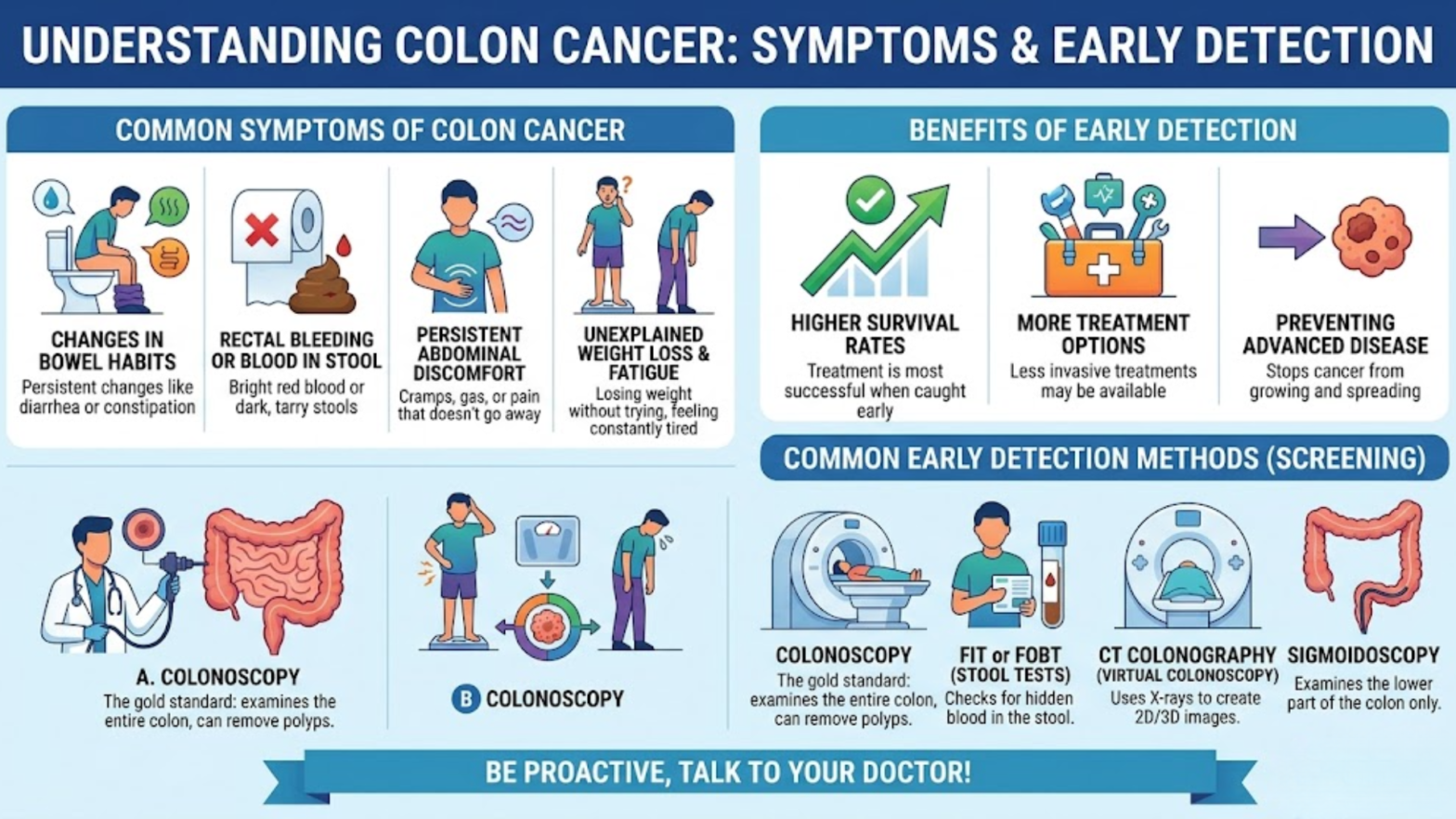
Colon cancer is one of the most common cancers, but it is also highly preventable and treatable when detected early. Unfortunately, many people ignore the warning signs, leading to late diagnosis.
In this blog, Dr. Shivam Vatsal Agarwal, Director and Head of Surgical Oncology and Robotic Surgery at Metro Cancer Institute, Faridabad, explains the symptoms, diagnosis, and importance of early detection of colon cancer.
What is Colon Cancer?
Colon cancer begins in the large intestine (colon) and often starts as small growths called polyps on the inner lining. While not all polyps become cancerous, some can develop into cancer over time if left untreated.
Common Symptoms of Colon Cancer
Recognizing early symptoms can save lives. Watch out for:
- Blood in stool (bright red or dark)
- Unexplained weight loss
- Persistent abdominal pain or bloating
- Changes in bowel habits (diarrhea, constipation, narrow stools)
- Fatigue and weakness
- Feeling that the bowel does not empty completely
These symptoms may be mistaken for piles or indigestion. Always consult a doctor if they persist.
Why Early Detection Matters
Detecting colon cancer early significantly improves outcomes:
- Less invasive treatment options
- Higher survival rates
- Reduced complications
Delaying diagnosis can allow cancer to spread, making treatment more difficult.
Key Diagnostic Tests for Colon Cancer
1. Fecal Occult Blood Test (FOBT)
Detects hidden blood in stool, which may indicate cancer.
2. Colonoscopy
The most effective diagnostic tool. A flexible tube with a camera examines the colon and detects polyps or tumors.
3. Biopsy
A tissue sample is taken and tested to confirm cancer.
4. CT Scan / PET Scan
Imaging tests used to determine if cancer has spread to other parts of the body.
Who Should Get Screened?
You should consider screening if:
- You are 45 years or older
- You have a family history of colon cancer
- You have inflammatory bowel disease
- You experience persistent symptoms
Screening can detect precancerous polyps before they turn into cancer.
Prevention Tips
Reduce your risk with these lifestyle changes:
- Eat a high-fiber diet (fruits, vegetables, whole grains)
- Limit red and processed meat
- Exercise regularly
- Avoid excessive alcohol consumption
- Maintain a healthy weight
Frequently Asked Questions (FAQs)
1. Is blood in stool always a sign of colon cancer?
No. It can also be caused by piles or infections. However, always consult a doctor.
2. Can colon cancer be cured?
Yes, especially when detected early.
3. Is colonoscopy painful?
No. It is usually done under sedation, so patients feel minimal discomfort.
4. How often should screening be done?
Most people should begin screening at 45 and repeat every 10 years, depending on risk factors.
5. Can young people get colon cancer?
Yes. Cases in younger individuals are increasing. Persistent symptoms should never be ignored.
When Should You See a Doctor?
Consult a doctor if you experience:
- Persistent bowel habit changes
- Blood in stool
- Unexplained weight loss
- Ongoing abdominal discomfort
Early consultation can prevent serious complications.
Take Charge of Your Health Today
Colon cancer is treatable when detected early. Awareness, timely screening, and expert consultation can save lives.
Book your consultation with Dr. Shivam Vatsal Agarwal at Metro Cancer Institute, Faridabad, and take the first step toward better health.


