Stop Eating These? 10 Foods That Increase Cancer Risk
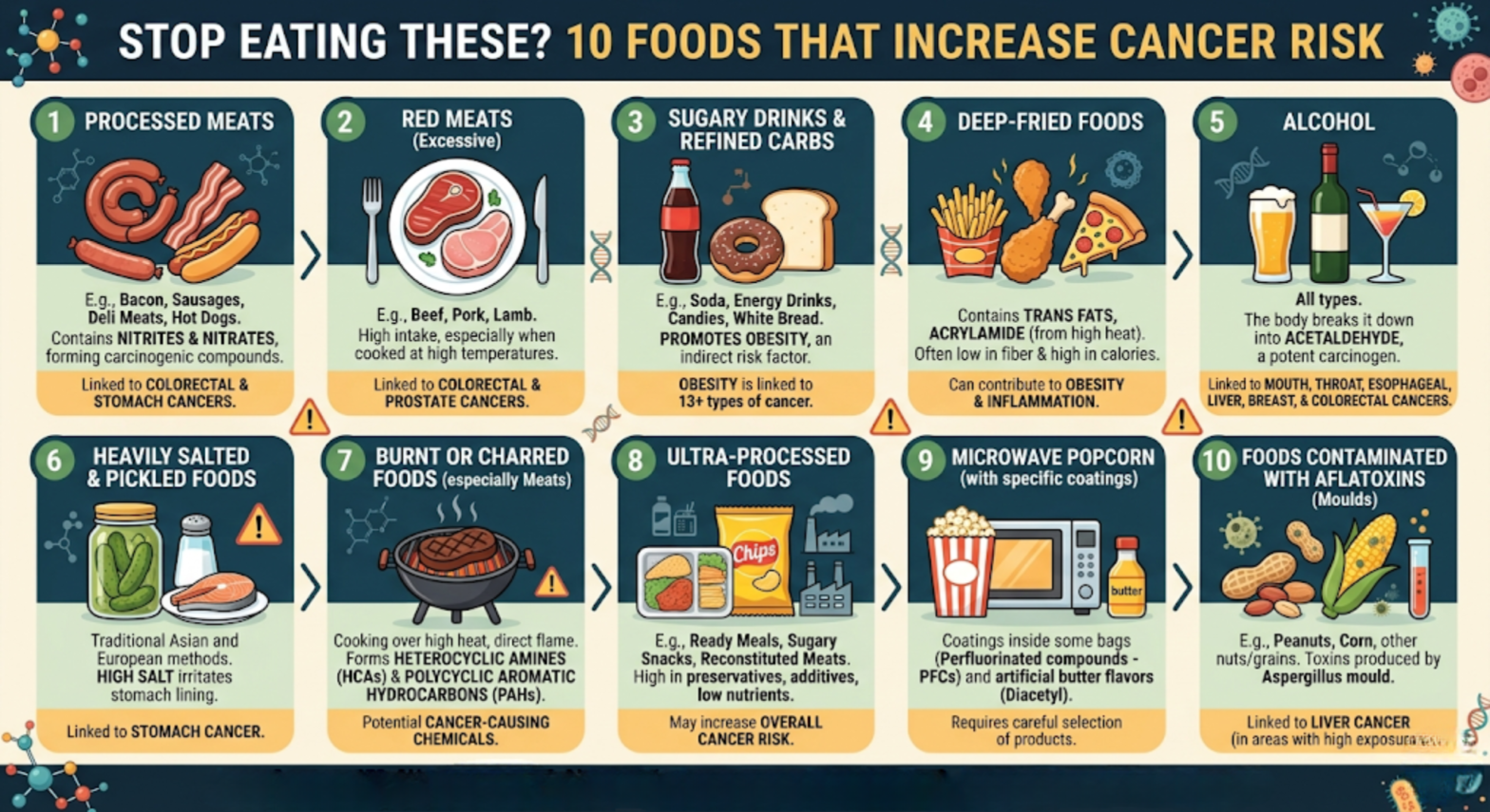
What we eat every day plays a role in our overall health. While no single food directly causes cancer research shows that certain eating habits and processed foods may increase the risk of developing cancer over time. Modern lifestyles have made unhealthy foods easily available. Eating too much of these items can harm the body in many ways.
In this guide Dr. Shivam Vatsal Agarwal, Surgical Oncologist explains 10 foods and ingredients that may increase cancer risk and why reducing them from your diet can help protect your health.
Why Diet Matters in Cancer Prevention
A healthy diet supports the immune system, reduces inflammation and helps the body fight harmful cell changes. On the other hand, diets high in processed foods, unhealthy fats, too much sugar and chemicals may increase oxidative stress and inflammation both of which are linked to cancer development.
Making dietary changes today can reduce long-term health risks and improve overall well-being.
10 Foods That May Increase Cancer Risk
1. Processed Meats
Foods like sausages, bacon, salami, hot dogs and packaged deli meats contain preservatives like nitrates and nitrites. These compounds may form cancer-causing substances in the body.
Health Risk: Increased risk of stomach cancers from eating processed meats.
2. Deep-Fried Foods
French fries, chips, fried snacks and fast food cooked at high temperatures can produce harmful compounds like acrylamide.
Health Risk: Linked to inflammation, obesity and possible cancer risk from eating much fried food.
3. Sugary Soft Drinks
Soft drinks and sugary beverages contain high amounts of sugar and artificial additives. Excess sugar consumption contributes to obesity, which is a major risk factor for many cancers.
Health Risk: Higher risk of obesity-related cancers like breast and colon cancer from drinking soft drinks.
4. Ultra-Processed Foods
Instant noodles, packaged snacks, frozen meals and processed foods often contain additives, preservatives, unhealthy fats and excess sodium.
Health Risk: Long-term inflammation and metabolic disorders from eating too much ultra-processed foods.
5. Burnt or Charred Meat
Cooking meat over flames or at very high temperatures can create harmful chemicals called heterocyclic amines (HCAs) and polycyclic aromatic hydrocarbons (PAHs).
Health Risk: Increased risk of pancreatic and prostate cancers from eating burnt or charred meat.
6. Refined Sugar and Sweets
Excessive intake of cakes, candies, pastries and sugary desserts may contribute to obesity and insulin resistance.
Health Risk: Obesity-related cancers and chronic inflammation from eating too much refined sugar and sweets.
7. Alcohol
Frequent alcohol consumption is associated with several types of cancers including liver, breast, throat and oral cancer.
Health Risk: Damage to cells and increased carcinogenic exposure from drinking alcohol.
8. Artificially Processed Packaged Foods
Foods loaded with artificial colors, preservatives and flavor enhancers may negatively impact long-term health when consumed regularly.
Health Risk: Potential cellular damage and poor gut health from eating artificially processed packaged foods.
9. Excessively Salty Foods
Pickles, packaged soups, processed snacks and foods high in salt can damage the stomach lining over time.
Health Risk: Increased risk of stomach cancer and hypertension from eating salty foods.
10. Trans Fat-Rich Foods
Margarine, packaged baked goods and processed fast foods often contain unhealthy trans fats.
Health Risk: Chronic inflammation, obesity and heart disease risk factors associated with cancer from eating trans fat-rich foods.
Healthier Alternatives You Should Choose
Instead of processed and unhealthy foods focus on:
- Fresh fruits and vegetables
- Whole grains
- Nuts and seeds
- Lean proteins
- Green leafy vegetables
- Homemade meals
- Plenty of water
- Antioxidant-rich foods
A balanced whole-food diet can significantly improve overall health and support cancer prevention.
Lifestyle Habits That Help Reduce Cancer Risk
Diet is only one part of prevention. Other healthy habits include:
- Exercising regularly
- Avoiding tobacco products
- Limiting alcohol intake
- Maintaining a healthy weight
- Getting regular health screenings
- Managing stress
- Sleeping adequately
Cancer prevention starts with everyday choices. While it is impossible to avoid every risk factor, reducing the intake of processed, sugary, fried and chemically preserved foods can help lower the chances of developing serious health conditions.
Small changes in your diet today can lead to a healthier future tomorrow.
Frequently Asked Questions (FAQs)
Can certain foods directly cause cancer?
No single food directly causes cancer. However regular consumption of unhealthy processed foods can increase the risk over time.
Which foods are safest for cancer prevention?
Fresh fruits, vegetables, whole grains, nuts and antioxidant-rich foods are considered beneficial for overall health and cancer prevention.
Is sugar linked to cancer?
Excess sugar can contribute to obesity and inflammation both of which are associated with increased cancer risk.
Is processed meat harmful?
Research has shown that regular consumption of processed meat may increase the risk of colorectal cancer.
Can changing diet reduce cancer risk?
Yes. A healthy lifestyle combined with proper nutrition exercise and regular screenings can help lower cancer risk.
Concerned about cancer prevention or early warning signs?
Consult Dr. Shivam Vatsal Agarwal, Surgical Oncologist for expert guidance on cancer prevention, diagnosis and treatment.
Take the first step toward a healthier life today. Early awareness and healthy habits can make a difference.


