Does Sugar Actually Feed Cancer? Let’s Clear the Myth!
Understanding the Truth About Sugar, Cancer, and Your Diet
When someone is diagnosed with cancer, one of the most common questions patients and families ask is:
“Does eating sugar make cancer grow faster?”
“Should cancer patients completely stop eating sugar?”
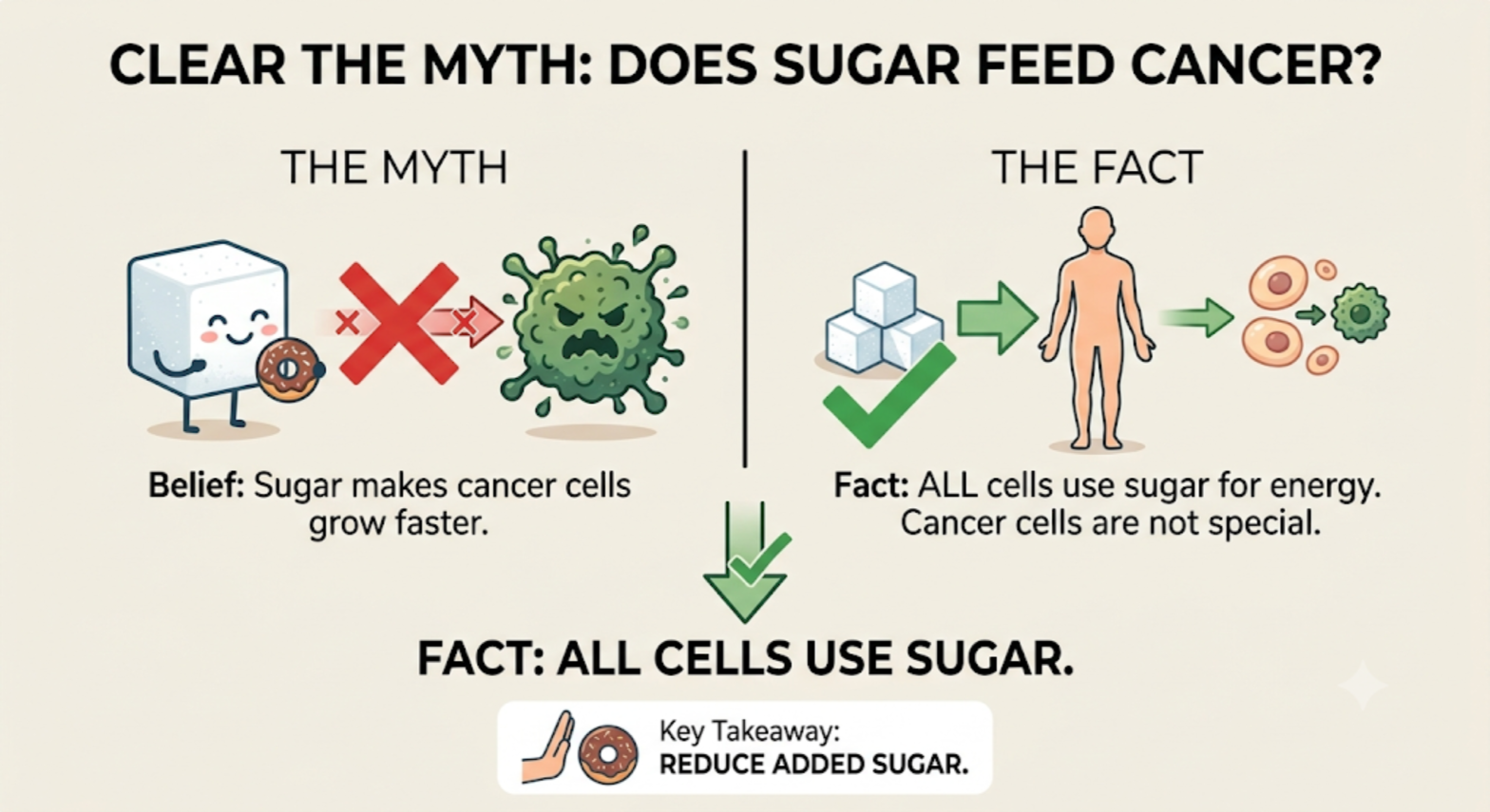
The idea that “sugar feeds cancer” has become a widespread belief, creating fear and confusion among patients. While it is true that cancer cells use glucose (a form of sugar) for energy, the relationship between sugar and cancer is much more complex than simply saying that sugar causes cancer growth.
In this detailed guide, Dr. Shivam Vatsal Agarwal, Director & Head – Surgical Oncology & Robotic Surgery, explains the connection between sugar, cancer risk, cancer treatment, and healthy dietary choices.
The Sugar and Cancer Connection: What Is the Reality?
Every cell in our body requires energy to function. Glucose, which comes from carbohydrates and sugars, is one of the primary sources of energy for normal cells as well as cancer cells.
Cancer cells often consume glucose at a higher rate compared to normal cells because they grow and divide rapidly. This process is known as the Warburg effect, where cancer cells rely heavily on glucose metabolism.
However, this does not mean that eating sugar directly feeds cancer or causes cancer to spread.
Your body carefully regulates blood sugar levels. Whether you eat sugar, carbohydrates, or other foods, glucose is supplied throughout your body—not only to cancer cells.
The important factors are:
- Maintaining a healthy weight
- Following a balanced diet
- Avoiding excessive intake of processed foods
- Staying physically active
- Following your oncologist’s treatment plan
Can Eating Sugar Cause Cancer?
No, sugar alone does not directly cause cancer.
There is no scientific evidence proving that eating normal amounts of sugar directly causes cancer.
However, excessive sugar intake over time can contribute to:
- Weight gain
- Obesity
- Insulin resistance
- Chronic inflammation
These conditions may increase the risk of developing certain cancers.
High consumption of sugary foods and beverages can also replace healthier foods in your diet, leading to poor nutrition.
The concern is not sugar itself but excessive sugar consumption and unhealthy dietary patterns.
Should Cancer Patients Stop Eating Sugar Completely?
A common misconception is that cancer patients must completely eliminate sugar from their diet.
This is usually unnecessary.
Cancer patients need adequate nutrition to:
- Maintain strength
- Support immunity
- Recover after surgery
- Tolerate chemotherapy and radiation therapy
- Maintain healthy body weight
Completely avoiding carbohydrates or sugar without medical guidance may lead to:
- Unintentional weight loss
- Muscle loss
- Weakness
- Reduced ability to recover
Instead, cancer patients should focus on choosing healthier sources of carbohydrates.
Healthy Sources of Carbohydrates for Cancer Patients
Instead of focusing only on removing sugar, focus on improving the quality of your diet.
Healthy carbohydrate options include:
Whole Grains
Examples:
- Brown rice
- Whole wheat
- Oats
- Millets
Fruits
Fruits provide:
- Vitamins
- Minerals
- Fibre
- Antioxidants
Examples:
- Apples
- Berries
- Papaya
- Oranges
Vegetables
Vegetables provide essential nutrients that support overall health.
Include:
- Green leafy vegetables
- Cruciferous vegetables like broccoli and cauliflower
- Colourful vegetables
Legumes
Examples:
- Lentils
- Beans
- Chickpeas
These provide fibre and plant-based protein
Foods High in Added Sugar to Limit
While sugar does not directly “feed” cancer, limiting excessive added sugar is beneficial for overall health.
Reduce intake of:
- Soft drinks
- Packaged juices
- Sweets and desserts
- Candy
- Cakes and pastries
- Highly processed snacks
Instead, choose balanced meals containing:
- Protein
- Fibre-rich carbohydrates
- Healthy fats
- Adequate fluids
Does a Sugar-Free Diet Cure Cancer?
No.
A sugar-free diet is not a proven cure for cancer.
Cancer treatment requires evidence-based medical approaches such as:
- Surgery
- Chemotherapy
- Radiation therapy
- Targeted therapy
- Immunotherapy
Diet can support treatment by improving strength, recovery, and quality of life, but it should not replace medical treatment.
Sugar, Cancer Prevention, and Healthy Lifestyle
A healthy lifestyle can reduce the risk of several diseases, including some cancers.
Important prevention strategies include:
Maintain Healthy Body Weight
Excess body fat can increase inflammation and affect hormone levels linked with cancer risk.
Exercise Regularly
Physical activity helps:
- Improve metabolism
- Maintain weight
- Support overall wellbeing
Eat a Balanced Diet
A cancer-protective eating pattern includes:
- Plenty of vegetables and fruits
- Whole grains
- Adequate protein
- Limited processed foods
Avoid Tobacco and Excess Alcohol
These remain major preventable risk factors for many cancers.
Expert Advice From Dr. Shivam Vatsal Agarwal
Many cancer myths create unnecessary fear among patients. The goal should not be extreme dietary restrictions but making informed, healthy choices.
Every cancer patient has different nutritional needs depending on:
- Type of cancer
- Stage of disease
- Treatment plan
- Weight and nutritional status
Always discuss major diet changes with your cancer care team.
Frequently Asked Questions (FAQs)
1. Does sugar directly cause cancer?
No. Sugar does not directly cause cancer. However, excessive sugar intake may contribute to obesity and metabolic problems that can increase cancer risk.
2. Do cancer cells need sugar to survive?
All body cells need glucose for energy. Cancer cells may use glucose differently, but avoiding sugar completely does not stop cancer growth.
3. Should cancer patients avoid all sweets?
Cancer patients can usually consume small amounts of sweets occasionally. The focus should be on a balanced and nutritious diet.
4. Can quitting sugar cure cancer?
No. Removing sugar from the diet does not cure cancer. Proper cancer treatment under medical supervision is essential.
5. What foods should cancer patients eat?
Cancer patients should focus on nutrient-rich foods including vegetables, fruits, whole grains, protein sources, and healthy fats based on their individual needs.
6. Is fruit sugar harmful for cancer patients?
No. Whole fruits contain natural sugars along with fibre, vitamins, and antioxidants. They can be part of a healthy diet for most people.
7. Can high sugar intake increase cancer risk?
A diet consistently high in added sugars may contribute to obesity and metabolic changes, which are associated with increased risk of some cancers.
Book an Appointment With Dr. Shivam Vatsal Agarwal
If you or your loved one has questions about cancer treatment, nutrition, surgery, or cancer prevention, consult an experienced surgical oncology specialist.
Dr. Shivam Vatsal Agarwal
Director & Head – Surgical Oncology & Robotic Surgery
Metro Cancer Institute
Metro Hospital, Sector 16,
Faridabad (NCR) – 121002, India
Appointment Details
📞 Call Now: +91-99688 56411
📧 Email: shivamvatsal@gmail.com
🌐 Website: www.drshivamvatsal.com
About Dr. Shivam Vatsal Agarwal
Dr. Shivam Vatsal Agarwal is a leading Surgical Oncologist and Robotic Surgery specialist serving patients with various cancers. As Director & Head – Surgical Oncology & Robotic Surgery, he focuses on advanced cancer surgeries, evidence-based treatment approaches, and patient-centred cancer care.
His approach combines modern surgical techniques with personalized treatment planning to help patients achieve the best possible outcomes.


