Can Cancer Return After Treatment? Stages & Recurrence Explained
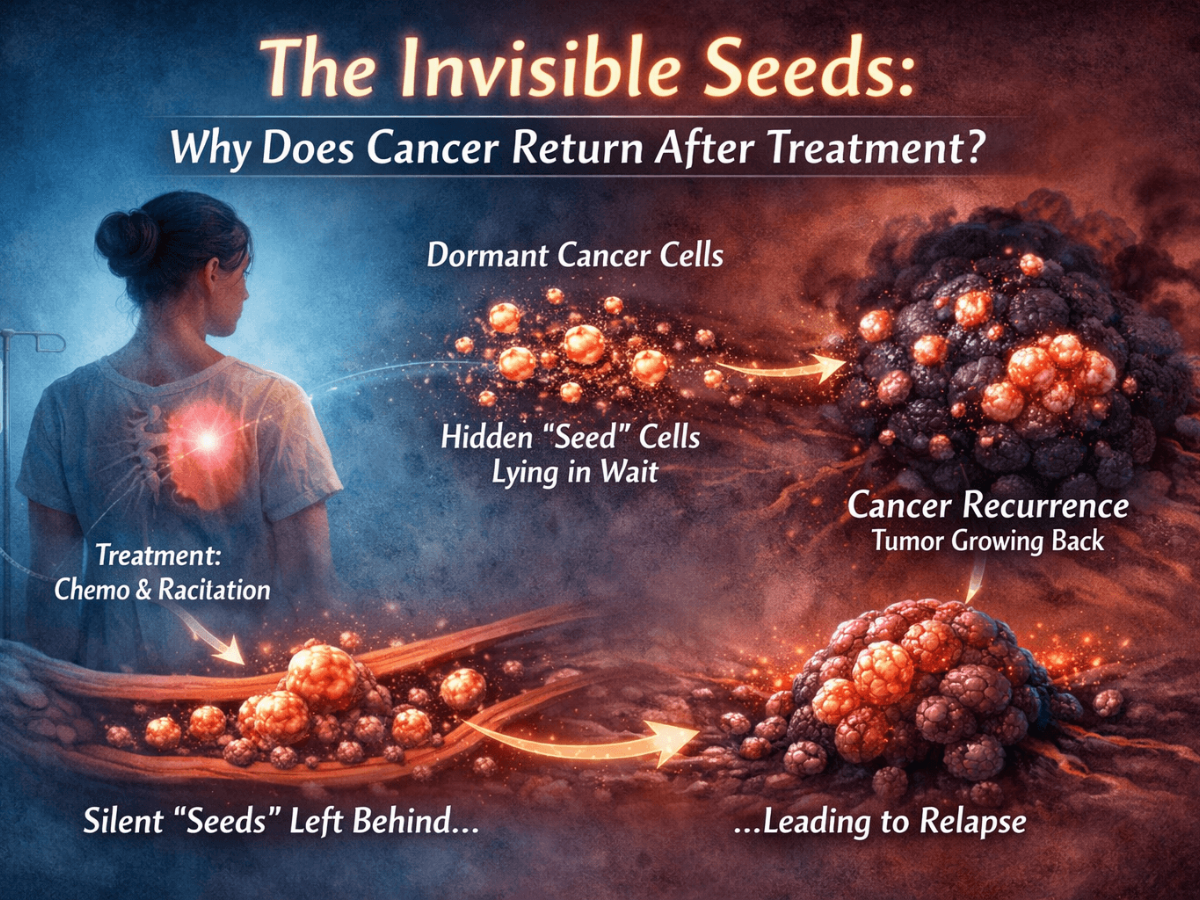
Have you finished cancer treatment but still find yourself wondering, “What if the cancer comes back?”
If that thought has crossed your mind, you’re far from alone.
For many cancer survivors, the end of treatment brings relief—but it can also bring a new kind of anxiety. Every ache, cough, or unusual symptom may spark worry. The good news is that not every symptom means cancer has returned, and with regular follow-ups, many recurrences can be detected early and treated effectively.
Let’s understand what cancer recurrence really means, why it happens, who is at risk, and what you can do to stay healthy after treatment.
What Does Cancer Recurrence Mean?
Think of it like a few tiny seeds left behind in a garden after removing weeds. Even though the garden looks completely clean, those microscopic seeds may grow again months or even years later. Similarly, a very small number of cancer cells may survive treatment and later become active.
Quick Answer
- What is cancer recurrence? Cancer returning after successful treatment.
- Why does cancer return? Some cancer cells may survive treatment and begin growing again.
- Can recurrence be treated? Yes. Many recurrent cancers can be treated successfully, especially when detected early.
- Does recurrence mean treatment failed? No. It simply means a few cancer cells survived despite the best available treatment.
Does Cancer Returning Mean the First Treatment Didn’t Work?
No—not at all.
Modern cancer treatments such as surgery, chemotherapy, radiation therapy, targeted therapy, immunotherapy, and robotic surgery are extremely effective. However, cancer is a complex disease.
Sometimes individual cancer cells can:
- Hide from treatment
- Become resistant to certain therapies
- Remain dormant for years
- Start growing again later
This is why doctors emphasize regular follow-up appointments even after successful treatment.
Types of Cancer Recurrence
Understanding where cancer returns helps doctors decide the best treatment plan.
1. Local Recurrence
Cancer comes back in the same place where it first started.
Example:
A breast cancer removed with surgery later appears in the same breast or surgical area.
2. Regional Recurrence
Cancer returns in nearby lymph nodes or tissues close to the original cancer.
This usually means the disease has spread only a short distance.
3. Distant Recurrence (Metastatic Recurrence)
Cancer appears in another part of the body, such as:
- Liver
- Lungs
- Bones
- Brain
Although it develops elsewhere, it is still named after the original cancer.
For example:
Breast cancer spreading to the bone is still called metastatic breast cancer, not bone cancer.
Why Does Cancer Come Back?
There isn’t one single reason.
Several factors influence recurrence.
Common Reasons
- Microscopic cancer cells remained after treatment
- Aggressive tumor biology
- Advanced stage at diagnosis
- Cancer resistant to therapy
- Incomplete response to treatment
- Certain genetic mutations
- Delayed diagnosis initially
Every patient’s cancer behaves differently, which is why treatment is highly individualized.
Which Cancer Stages Have the Highest Risk of Recurrence?
One of the most common questions patients ask is:
“Does my cancer stage affect the chances of recurrence?”
The answer is yes.
Generally:
| Cancer Stage | Recurrence Risk |
| Stage 0 | Very Low |
| Stage I | Low |
| Stage II | Moderate |
| Stage III | Higher |
| Stage IV | Highest (often managed as advanced disease) |
However, stage alone does not determine recurrence.
Other factors include:
- Cancer type
- Grade of tumor
- Lymph node involvement
- Hormone receptor status
- Genetic markers
- Surgical margins
- Overall health
- Response to treatment
For example, some early-stage cancers may still require chemotherapy because their biology suggests a higher chance of recurrence.
Can Cancer Return Years Later?
Yes. Some cancers can return even many years after treatment.
Different cancers behave differently.
Examples:
- Breast cancer may recur even after 10–20 years.
- Melanoma sometimes returns after several years.
- Colon cancer usually recurs within the first five years if it does.
- Certain blood cancers may relapse multiple times.
This is exactly why lifelong awareness and scheduled follow-up visits are important.
Symptoms That Should Never Be Ignored
Not every symptom means recurrence, but some deserve medical attention.
Contact your doctor if you experience:
- Persistent unexplained pain
- New lump or swelling
- Unexplained weight loss
- Ongoing fatigue
- Persistent cough
- Difficulty swallowing
- Blood in stool or urine
- Loss of appetite
- Unusual bleeding
- New neurological symptoms like headaches or weakness
If symptoms persist for more than two weeks, it’s best to get evaluated.
How Doctors Check for Cancer Recurrence
Regular surveillance helps detect recurrence early.
Your doctor may recommend:
Physical Examination
Checking surgical sites, lymph nodes, and overall health.
Blood Tests
Certain cancers have tumor markers that may help monitor recurrence.
Imaging Tests
Depending on your cancer type:
- CT Scan
- MRI
- PET-CT Scan
- Ultrasound
- Mammography
Biopsy
If a suspicious area is found, a biopsy confirms whether it is cancer.
The follow-up schedule depends on your original diagnosis and treatment plan.
Can Cancer Recurrence Be Treated?
Yes. Many recurrent cancers are treatable, and treatment depends on where the cancer has returned, its extent, and your overall health.
Treatment options may include:
- Repeat surgery
- Robotic cancer surgery
- Chemotherapy
- Radiation therapy
- Targeted therapy
- Immunotherapy
- Hormone therapy
- Clinical trials
- Palliative care, when appropriate, to improve quality of life
Many patients continue to live active and meaningful lives after treatment for recurrent cancer.
How Can You Reduce the Risk of Cancer Coming Back?
Although recurrence cannot always be prevented, healthy habits can lower the risk and improve overall health.
Healthy Lifestyle Tips
- Maintain a healthy body weight
- Stay physically active
- Eat plenty of fruits and vegetables
- Avoid tobacco in every form
- Limit alcohol
- Get adequate sleep
- Manage stress
- Take prescribed medications regularly
- Never skip follow-up appointments
Small lifestyle changes can make a meaningful difference over time.
Meet the Expert
Dr. Shivam Vatsal Agarwal – Surgical Oncology & Robotic Surgery
Cancer care is about much more than removing a tumor—it is about guiding patients through every stage of their journey with compassion, clarity, and evidence-based treatment.
Dr. Shivam Vatsal Agarwal is a highly experienced Surgical Oncologist and Robotic Cancer Surgeon at Metro Cancer Institute, Metro Hospital, Faridabad. He specializes in advanced cancer surgeries, minimally invasive robotic procedures, gastrointestinal cancers, breast cancer, head & neck cancers, thoracic cancers, and complex oncological care.
His philosophy is simple: early diagnosis, personalized treatment, and compassionate support lead to the best outcomes. Every patient receives a treatment plan tailored to their unique condition, with a focus on preserving quality of life while delivering world-class cancer care.
Patient Voices
⭐ “After my surgery, I constantly worried about recurrence. Dr. Shivam explained every follow-up test patiently and gave me confidence. Two years later, I’m doing well and living life without constant fear.” – Anita S.
⭐ “The robotic surgery experience was smoother than I expected. The doctor answered every question honestly, and the recovery was faster than I imagined.” – Rajesh K.
⭐ “From diagnosis to treatment and follow-up, the entire team treated us like family. Their guidance helped us stay positive throughout the journey.” – Meena G.
Your Cancer Follow-Up Journey
| Stage | What Happens |
| ✅ Treatment Completed | Surgery, chemotherapy, radiation, or other therapy ends |
| ✅ Recovery Phase | Healing and gradual return to normal activities |
| ✅ Regular Follow-Up | Physical exams, scans, and blood tests as recommended |
| ✅ Early Detection | Any concerns are evaluated promptly |
| ✅ Personalized Treatment | If recurrence is detected, a tailored treatment plan is created |
Frequently Asked Questions
Can cancer come back after being completely removed?
Yes, cancer can sometimes return even after complete removal. Tiny cancer cells that cannot be seen during surgery or imaging may remain and grow later, which is why regular follow-up is essential.
Is cancer recurrence common?
It depends on the type and stage of cancer. Some cancers have a very low recurrence risk, while others require long-term monitoring because they are more likely to return.
What are the first signs that cancer has come back?
Persistent new symptoms should always be evaluated. A new lump, unexplained weight loss, ongoing pain, unusual bleeding, or persistent fatigue are examples of symptoms that should be discussed with your doctor.
Can lifestyle changes prevent cancer recurrence?
Healthy habits can reduce risk but cannot guarantee prevention. Regular exercise, a balanced diet, avoiding tobacco, limiting alcohol, and attending follow-up visits all contribute to better long-term health.
How often should cancer survivors have follow-up check-ups?
The schedule depends on your cancer type and treatment. Most patients are seen more frequently during the first few years after treatment and then less often if they remain cancer-free.
If cancer comes back, can it still be cured?
In many cases, yes. Some recurrent cancers can be treated successfully with surgery, radiation, chemotherapy, targeted therapy, immunotherapy, or a combination of treatments, especially when detected early.
Take the Next Step
If you or a loved one has completed cancer treatment and wants expert guidance on follow-up care, recurrence risk, or a second opinion, professional evaluation can provide clarity and peace of mind.
📍 Visit Metro Cancer Institute
Doctor: Dr. Shivam Vatsal Agarwal
Specialty: Surgical Oncology & Robotic Surgery
Clinic: Metro Cancer Institute, Metro Hospital
Address: Sector 16, Faridabad, Haryana, India
Phone: +91-99688 56411
[📞 CALL NOW BUTTON]
+91-99688 56411
[📅 BOOK APPOINTMENT BUTTON]
Online Appointment Booking Placeholder
Clinic Address
Metro Cancer Institute
Metro Hospital
Sector 16
Faridabad, Haryana, India
Remember: Completing cancer treatment is a major milestone, but staying connected with your healthcare team is just as important. Regular follow-ups, healthy habits, and prompt attention to new symptoms can make all the difference. If you have concerns about cancer recurrence, don’t wait—seek expert advice and take proactive steps toward protecting your long-term health.


