5 Most Common Stomach Cancer Symptoms: Red Flags You Can’t Ignore | Stomach Cancer Symptoms in Faridabad
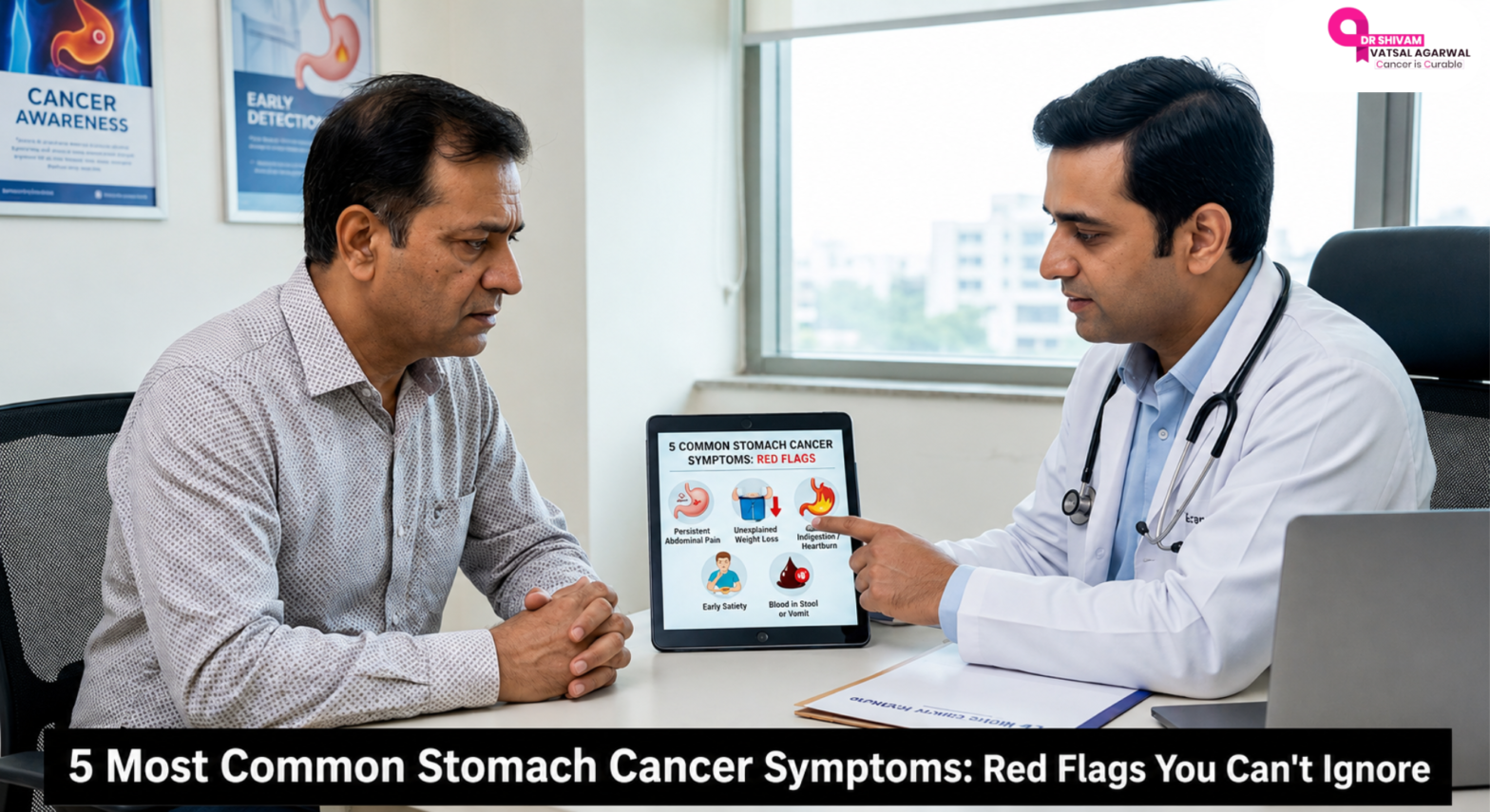
Are You Ignoring These Stomach Cancer Symptoms?
Are you suffering from constant acidity, unexpected weight loss, or nagging stomach pain? Many people brush these symptoms aside, assuming they are caused by indigestion or stress. However, stomach cancer often begins with vague digestive complaints, making it one of the most commonly overlooked cancers.
The good news is that early detection significantly improves treatment outcomes. Recognizing the warning signs and consulting a specialist at the right time can make a major difference.
If you’re looking for information about Stomach Cancer Symptoms in Faridabad, this guide explains the early signs, risk factors, diagnosis, and treatment options in simple language.
Why Should You Pay Attention to Stomach Cancer Symptoms?
Your stomach plays a vital role in digestion, and persistent digestive problems should never be ignored.
Although many stomach-related symptoms are caused by harmless conditions, symptoms that continue for several weeks deserve medical evaluation.
- Better treatment success
- More treatment options
- Higher chances of complete recovery
- Improved quality of life
What Is Stomach Cancer?
Stomach cancer (also known as gastric cancer) develops when abnormal cells grow uncontrollably in the lining of the stomach.
It usually develops slowly over many years, which is why early symptoms are often mild and easy to miss.
Quick Facts About Stomach Cancer
What is stomach cancer?
Cancer that develops in the lining of the stomach.
Who is at risk?
People who are:
- Above 50 years of age
- Smokers
- Living with chronic gastritis
- Infected with Helicobacter pylori (H. pylori)
- Obese
- Eating diets high in smoked or salty foods
- Having a family history of stomach cancer
Is stomach cancer curable?
Yes. When diagnosed in its early stages, stomach cancer can often be treated successfully using surgery along with other therapies when required.
Top 5 Symptoms of Stomach Cancer You Shouldn’t Ignore
1. Persistent Indigestion or Acidity
Occasional acidity is common.
However, if indigestion continues despite medications and dietary changes, it may indicate an underlying stomach problem.
Watch for:
- Frequent heartburn
- Persistent bloating
- Feeling full quickly
- Burning sensation after meals
If these symptoms continue for several weeks, consult a specialist.
2. Unexplained Weight Loss
Sudden weight loss without trying is an important warning sign.
You may notice:
- Clothes becoming loose
- Reduced appetite
- Weakness
- Weight dropping without changes in diet or exercise
This can happen because stomach cancer affects appetite and nutrient absorption.
3. Feeling Full After Eating Very Little
Many patients describe feeling full after eating only a few bites.
This happens because the stomach’s capacity may become reduced as the disease progresses.
If this symptom persists, medical evaluation is recommended.
4. Blood in Vomit or Black-Colored Stools
This symptom should never be ignored.
Bleeding inside the stomach may appear as:
- Black, tar-like stools
- Vomiting blood
- Vomit that looks like coffee grounds
These signs require immediate medical attention.
5. Persistent Dull Stomach Pain
Unlike temporary stomach discomfort, stomach cancer pain often persists.
It may feel like:
- Pressure in the upper abdomen
- Dull stomach ache
- Pain after eating
- Discomfort beneath the ribs
Persistent abdominal pain should always be evaluated by a doctor.
Other Symptoms of Stomach Cancer
In addition to the five major warning signs, some patients may experience:
- Loss of appetite
- Nausea
- Vomiting
- Fatigue
- Weakness
- Difficulty swallowing (in some cases)
- Anemia caused by slow internal bleeding
These symptoms do not necessarily mean cancer, but they should not be ignored if they continue.
What Causes Stomach Cancer?
Most stomach cancers develop gradually over many years.
Common risk factors include:
- Helicobacter pylori (H. pylori) infection
- Smoking
- Excessive alcohol consumption
- Diet rich in smoked and salted foods
- Obesity
- Chronic gastritis
- Family history of stomach cancer
- Previous stomach surgery
- Increasing age
Reducing these risk factors may lower your chances of developing stomach cancer.
How Is Stomach Cancer Diagnosed?
Early diagnosis usually involves a combination of tests.
Common investigations include:
- Upper GI Endoscopy – To examine the stomach lining
- Biopsy – To confirm the presence of cancer cells
- CT Scan
- PET-CT Scan
- Blood Tests
- Diagnostic Laparoscopy (for selected patients)
These tests help determine the stage of cancer and guide the most appropriate treatment plan.
Treatment Options for Stomach Cancer
Treatment depends on:
- Stage of cancer
- Tumor location
- Overall health of the patient
Treatment options may include:
- Robotic Stomach Cancer Surgery
- Laparoscopic Surgery
- Open Cancer Surgery
- Chemotherapy
- Targeted Therapy
- Immunotherapy
- Radiation Therapy (selected patients)
Many patients benefit from a combination of these treatments.
Expert Opinion
Dr. Shivam Vatsal Agarwal
Director & Head – Surgical Oncology & Robotic Surgery
Dr. Shivam Vatsal Agarwal specializes in evidence-based and compassionate cancer care. His expertise includes advanced minimally invasive and robotic cancer surgery while ensuring every patient understands each step of their treatment journey.
Clinic
Metro Cancer Institute
Metro Hospital, Sector 16
Faridabad (NCR) – 121002, India
Patient Testimonials
⭐⭐⭐⭐⭐
“For months, I ignored my stomach pain thinking it was acidity. Dr. Shivam explained everything clearly, diagnosed the problem, and guided me through surgery. I felt supported throughout my treatment.”
— Rakesh S.
⭐⭐⭐⭐⭐
“Robotic surgery exceeded my expectations. The recovery was much quicker than I imagined, and the entire team was extremely caring.”
— Neha G.
⭐⭐⭐⭐⭐
“From diagnosis to follow-up visits, everything was handled professionally. Dr. Shivam answered every question patiently and gave me confidence during a difficult time.”
— Amit K.
Your Treatment Journey
| Step | Description |
| Step 1 | Consultation with a Surgical Oncologist |
| Step 2 | Complete Medical History & Physical Examination |
| Step 3 | Endoscopy & Biopsy |
| Step 4 | CT Scan / PET-CT for Staging |
| Step 5 | Personalized Treatment Plan |
| Step 6 | Surgery ± Chemotherapy / Targeted Therapy |
| Step 7 | Recovery, Diet Advice & Regular Follow-up |
Frequently Asked Questions (FAQs)
1. What are the early symptoms of stomach cancer?
Early symptoms commonly include persistent indigestion, bloating, acidity, and feeling full after eating small amounts. If these symptoms continue for more than two to three weeks, consult a doctor.
2. Can stomach cancer be cured if detected early?
Yes. Early-stage stomach cancer can often be treated successfully with surgery, sometimes combined with chemotherapy or other treatments.
3. Does every stomach pain indicate cancer?
No. Most stomach pain is caused by non-cancerous conditions. However, persistent or worsening pain, especially when accompanied by weight loss, vomiting, or blood in stools, requires prompt medical evaluation.
4. Who has a higher risk of developing stomach cancer?
People over 50 years, smokers, individuals with H. pylori infection, chronic gastritis, obesity, or a family history of stomach cancer are at increased risk.
5. Which specialist treats stomach cancer in Faridabad?
A Surgical Oncologist is the appropriate specialist for diagnosing, staging, and treating stomach cancer.
6. When should I see a doctor?
Consult a doctor if digestive symptoms persist for more than two weeks or if you develop alarming symptoms such as unexplained weight loss, blood in vomit, or black stools.
Why Choose an Experienced Cancer Specialist?
An experienced surgical oncologist provides:
- Accurate diagnosis
- Advanced surgical techniques
- Personalized treatment planning
- Comprehensive follow-up care
- Compassionate support throughout your cancer journey
If you have persistent digestive symptoms, don’t delay seeking medical advice.
Book Your Consultation Today
📞 Call Now
Phone: +91-99688 56411
📅 Schedule an Appointment
📍 Clinic Address
Metro Cancer Institute
Metro Hospital, Sector 16
Faridabad (NCR) – 121002, India
🗺️ Google Maps
[GOOGLE MAP EMBED PLACEHOLDER]
About the Author
Dr. Shivam Vatsal Agarwal
Director & Head – Surgical Oncology & Robotic Surgery
Metro Cancer Institute
Metro Hospital, Sector 16
Faridabad (NCR) – 121002, India
Phone: +91-99688 56411
Email: shivamvatsal@gmail.com
Website: www.shivamvatsal.com


