Best Robotic Cancer Surgeon in Faridabad & Delhi NCR: Minimally Invasive Cancer Surgery & Expert Care
Hearing the word “cancer” can make everything feel uncertain. Suddenly, you may have questions about surgery, recovery, treatment options, hospital facilities, and, most importantly, whether you are choosing the right cancer surgeon.
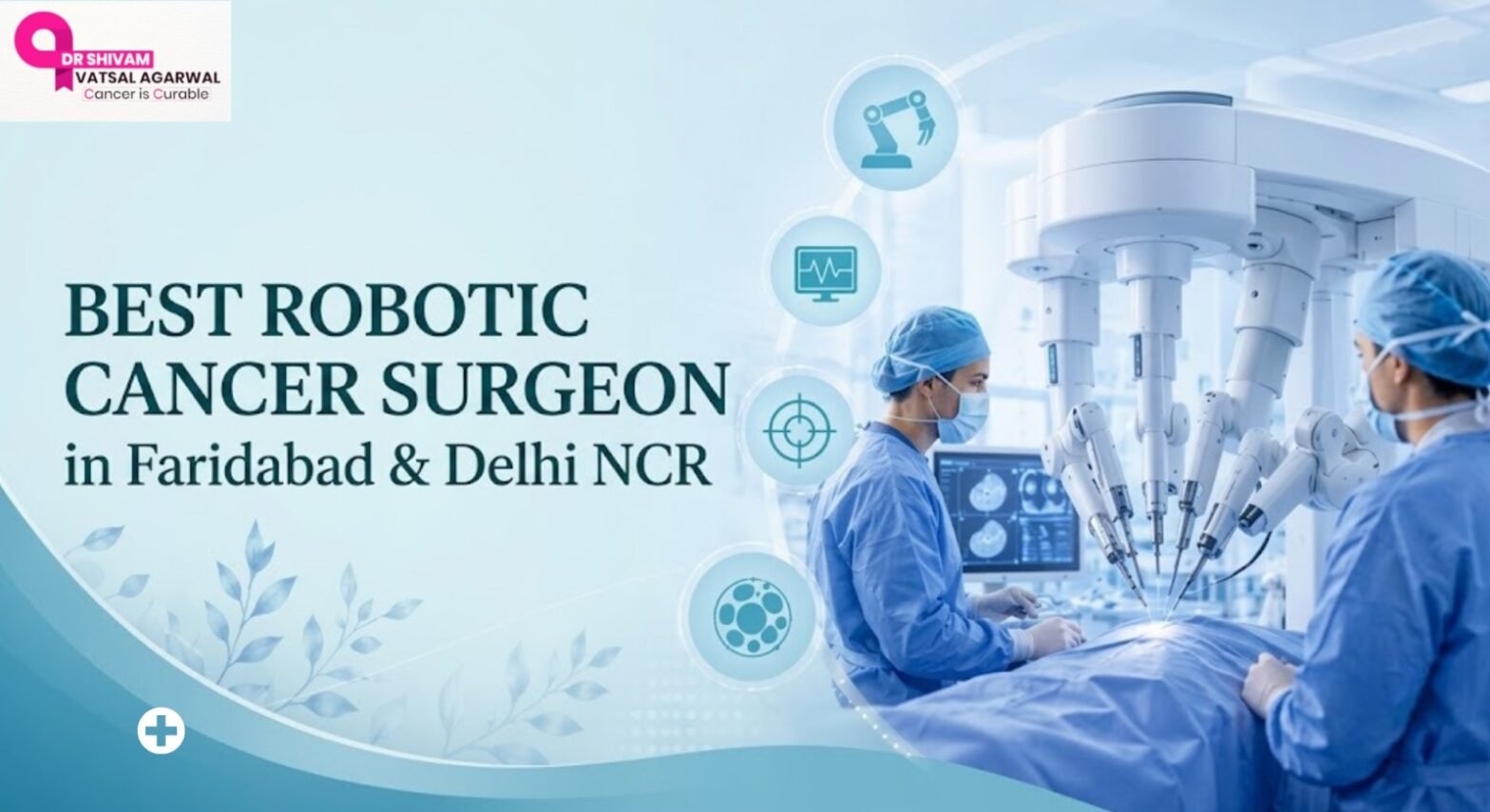
If your doctor has recommended surgery for cancer, robotic-assisted cancer surgery may be one of the treatment options you can discuss with a qualified surgical oncologist. This advanced approach allows a trained surgeon to control specialised instruments designed to perform complex procedures through small incisions when appropriate.
For patients searching for a robotic cancer surgeon in Faridabad and Delhi NCR, Dr. Shivam Vatsal Agarwal provides surgical oncology care at Metro Cancer Institute, Faridabad, with expertise in cancer surgery and minimally invasive surgical techniques.
What Is Robotic Cancer Surgery?
Robotic cancer surgery is a type of minimally invasive surgery in which a trained surgeon controls specialised robotic instruments from a console.
It is important to understand that the robot does not independently perform the operation or make treatment decisions. The surgeon remains in control throughout the procedure.
You can think of the robotic system as providing highly advanced surgical instruments that allow the surgeon to perform delicate movements inside the body through small openings.
Robotic surgery may be considered for certain cancers depending on factors such as:
- Type of cancer
- Location of the tumour
- Cancer stage
- Patient’s overall health
- Previous treatments or surgeries
- Complexity of the planned operation
- Experience and expertise of the surgical team
Potential Benefits of Robotic Cancer Surgery
When robotic surgery is appropriate, it may offer certain advantages compared with some conventional surgical approaches.
These may include:
- Smaller surgical incisions
- More precise instrument movement
- Enhanced visualisation of the surgical field
- Potentially less tissue trauma
- Reduced post-operative discomfort in selected patients
- Potentially faster recovery in some cases
However, robotic surgery is not automatically better for every cancer patient. The safest and most effective surgical approach depends on the individual patient’s condition and treatment plan.
Which Cancers Can Be Treated With Robotic or Minimally Invasive Surgery?
Robotic and laparoscopic techniques can be considered for selected cancers where minimally invasive surgery is clinically appropriate.
Depending on the individual case, minimally invasive approaches may be used in the management of cancers involving areas such as:
- Gastrointestinal cancers
- Colorectal cancers
- Rectal cancers
- Lung cancers
- Breast cancer procedures
- Gynaecological malignancies
- Head and neck cancers
- Urological cancers
The suitability of robotic surgery varies significantly between patients. Cancer stage, tumour location, involvement of nearby structures and the type of operation required all play an important role.
Areas of Surgical Expertise
Dr. Shivam Vatsal Agarwal’s listed areas of expertise include:
- Head and neck cancer surgery
- Breast oncoplastic surgery
- Laparoscopic thoracic oncology
- Gynaecological malignancies
- Gastrointestinal cancer surgery
- Minimally invasive cancer surgery
A consultation with a surgical oncologist can help determine whether robotic, laparoscopic or open surgery is appropriate for your particular diagnosis.
Should Every Cancer Patient Have Robotic Surgery?
Robotic surgery is not necessary or suitable for every cancer patient.
Every cancer case is different, and the surgical approach should be selected according to the patient’s individual circumstances. In some situations, open surgery may provide the safest or most appropriate approach. In other cases, laparoscopic or robotic surgery may be considered.
The goal should not simply be to use the newest technology. The goal is to select the most appropriate cancer treatment for the patient.
Your surgical oncologist may consider several factors before recommending a particular approach, including:
- Type and stage of cancer
- Size and location of the tumour
- Involvement of nearby organs or tissues
- Lymph-node involvement
- Previous surgeries or cancer treatments
- Overall health and medical conditions
- Expected benefits and risks of each surgical approach
Why Choosing the Right Cancer Surgeon Matters
Cancer surgery is different from routine surgery. It often requires detailed planning around the tumour, surrounding organs, blood vessels, lymph nodes and the patient’s overall cancer treatment strategy.
A surgical oncologist specialises in the surgical management of cancer and may work alongside other specialists as part of a multidisciplinary cancer care team.
Depending on the cancer, treatment may involve a combination of:
- Surgery
- Chemotherapy
- Radiation therapy
- Immunotherapy
- Targeted therapy
- Hormonal therapy
When searching for a robotic cancer surgeon in Faridabad, consider more than just whether a hospital offers robotic technology.
Important factors include:
- Surgical oncology qualifications and training
- Experience with your specific cancer type
- Experience with minimally invasive procedures
- Experience with robotic-assisted surgery where relevant
- Availability of multidisciplinary cancer care
- Hospital infrastructure
- Post-operative monitoring and support
- Clear communication about benefits, risks and alternatives
According to the information provided, Dr. Shivam Vatsal Agarwal is listed by Metro Cancer Institute as Director & Head – Surgical Oncology and Robotic Surgery (Unit-II). His professional profile also lists training from AIIMS, New Delhi, and a fellowship in Laparoscopic and Robotic Oncology.
How Is Robotic Cancer Surgery Planned?
Robotic cancer surgery involves much more than the operation itself. Careful assessment and treatment planning take place before surgery.
1. Consultation and Evaluation
Your surgeon reviews your symptoms, medical history, previous treatments and diagnostic reports.
2. Diagnosis and Cancer Staging
Additional investigations may be required to understand the type, location and stage of the cancer.
3. Treatment Planning
The surgical team evaluates whether surgery is required and determines whether robotic, laparoscopic or open surgery would be most appropriate.
4. Surgical Procedure
If robotic surgery is selected, the surgeon controls the robotic instruments throughout the procedure.
5. Recovery and Monitoring
After surgery, your medical team monitors your recovery, manages pain and gradually helps you return to normal activities.
6. Pathology and Follow-Up
The surgical specimen may be examined by a pathologist. The final pathology report can provide important information that helps determine whether additional cancer treatment is required.
Your Cancer Surgery Journey at a Glance
| Treatment Stage | What Generally Happens |
| Consultation | Symptoms, medical history and reports are reviewed |
| Diagnosis & Staging | Cancer type, location and stage are assessed |
| Treatment Planning | Surgical and non-surgical treatment options are discussed |
| Procedure | Robotic, laparoscopic or open surgery may be performed |
| Recovery | Monitoring, pain management and gradual activity |
| Follow-Up | Pathology results and further treatment are reviewed |
Your actual treatment timeline can vary considerably depending on the cancer type, stage, surgical procedure and overall health.
Meet the Expert: Dr. Shivam Vatsal Agarwal
Dr. Shivam Vatsal Agarwal is a surgical oncologist associated with Metro Cancer Institute, Faridabad, where he is listed as Director & Head of Surgical Oncology and Robotic Surgery (Unit-II).
His professional profile lists training from AIIMS, New Delhi, along with a fellowship in Laparoscopic and Robotic Oncology.
His listed areas of expertise include head and neck cancer, breast cancer surgery, gastrointestinal cancer, lung cancer, gynaecological malignancies and minimally invasive cancer surgery.
For patients and their families, surgical expertise is only one part of good cancer care. It is equally important to understand why a particular operation is being recommended, what alternatives may exist and what recovery may involve.
A patient-centred approach combines appropriate cancer treatment, individualised surgical planning, clear communication and compassionate care.
Robotic Surgery Is a Technique, Not a Cancer Cure
One important point patients should remember is that robotic surgery itself does not cure cancer.
It is a surgical technique that may be used to perform certain cancer operations. Overall cancer outcomes depend on several factors, including:
- Cancer type and biology
- Stage at diagnosis
- Tumour characteristics
- Appropriate treatment selection
- Timing of treatment
- Surgical completeness
- Additional treatments when required
- Follow-up and surveillance
Therefore, the focus should always remain on treating the cancer appropriately rather than choosing a particular technology simply because it is newer.
Frequently Asked Questions About Robotic Cancer Surgery
1. What does a robotic cancer surgeon do?
A robotic cancer surgeon performs selected cancer operations using robotic-assisted surgical technology when appropriate. The surgeon controls the robotic instruments throughout the procedure; the robot does not independently perform the surgery.
2. Is robotic cancer surgery safe?
Robotic cancer surgery can be an appropriate and safe option for selected patients when performed by a properly trained surgical team. However, like any major operation, it carries potential risks and complications. Your surgeon should explain the expected benefits, limitations and risks before treatment.
3. Is robotic surgery better than open cancer surgery?
Not necessarily. The best surgical approach depends on the individual cancer and the patient’s condition. Robotic surgery may provide advantages in selected cases, while open surgery may be more appropriate for certain complex cancers.
4. How long does robotic cancer surgery take?
The duration depends on the type and complexity of the procedure. A relatively straightforward operation may take less time than complex surgery involving multiple organs or extensive lymph-node dissection.
5. How quickly can I recover after robotic cancer surgery?
Recovery differs from patient to patient. It depends on the type of cancer, procedure performed, overall health and post-operative recovery. Some patients undergoing minimally invasive surgery may recover sooner than those undergoing comparable open procedures, but there is no fixed recovery timeline.
Take the Next Step Towards Informed Cancer Care
A cancer diagnosis can be overwhelming, but you do not have to make every treatment decision alone.
Speaking with an experienced surgical oncologist can help you understand your diagnosis, treatment options and whether robotic, laparoscopic or conventional cancer surgery may be appropriate for your condition.
If you or a family member has been advised to undergo cancer surgery, discuss your options with a qualified specialist before making a decision.
Consultation Details
Dr. Shivam Vatsal Agarwal
Speciality: Surgical Oncology & Robotic Surgery
Hospital: Metro Cancer Institute Hospital, Faridabad
Call: 099688 56411
Clinic Address:
Ground Floor, Metro Cancer Institute Hospital,
Nirman Kunj, ADB PWD Colony,
Sector 16A, Faridabad, Haryana – 121002


