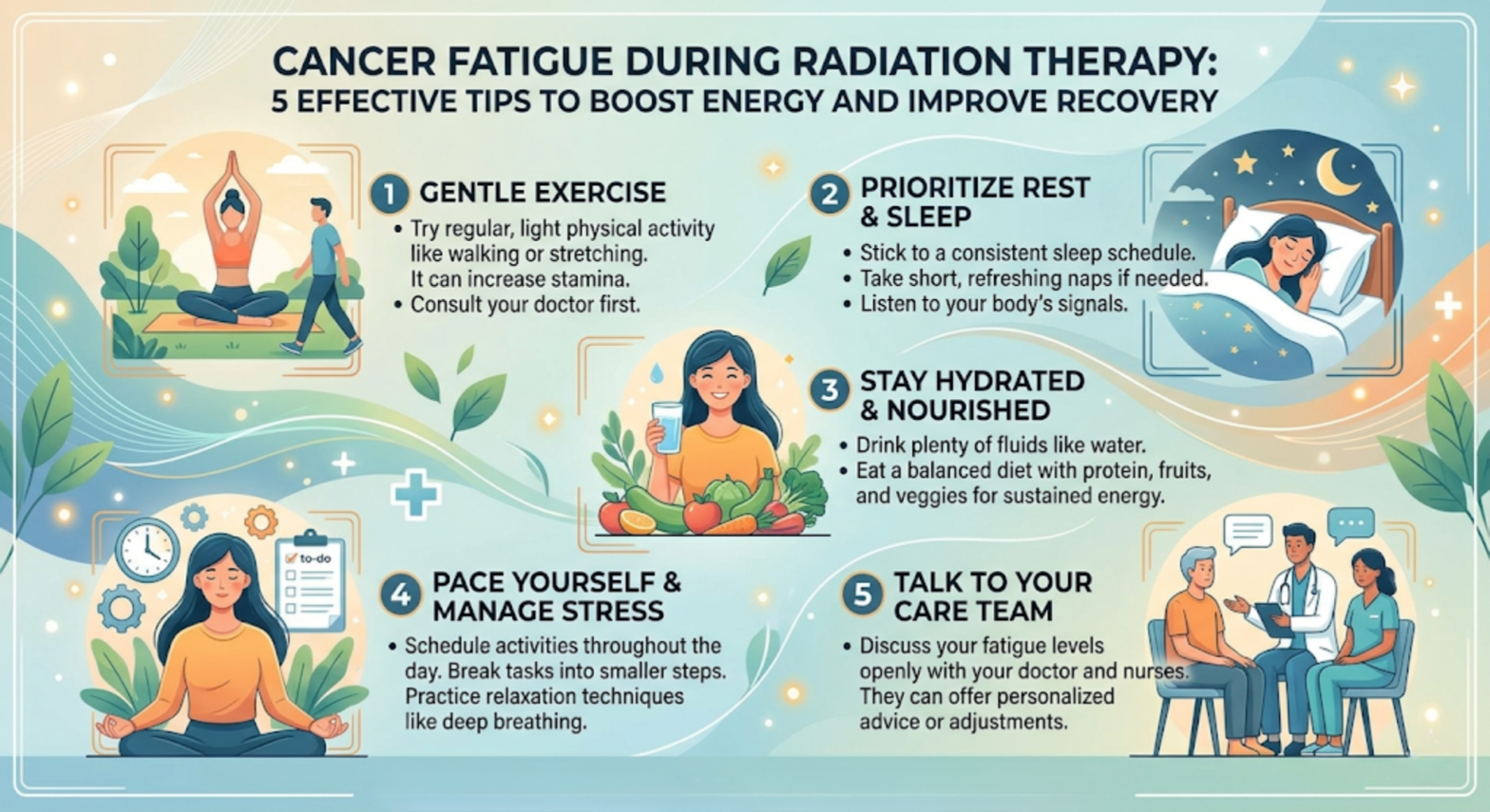
Cancer Fatigue During Radiation Therapy: 5 Effective Tips to Boost Energy and Improve Recovery
Cancer Fatigue: Why It Happens and How to Manage It
Fatigue is one of the most common and challenging side effects experienced by cancer patients during radiation therapy. Unlike normal tiredness, cancer-related fatigue can persist even after adequate rest and may affect daily activities, emotional well-being, and overall quality of life.
The good news is that there are practical ways to manage fatigue and maintain strength throughout treatment. Understanding the causes and adopting healthy lifestyle habits can help patients feel more energetic and improve their recovery journey.
In this guide, Dr. Shivam Vatsal Agarwal, Director & Head of Surgical Oncology & Robotic Surgery, shares five effective strategies to combat cancer-related fatigue during radiation treatment.
What Is Cancer-Related Fatigue?
Cancer-related fatigue is a persistent feeling of physical, mental, and emotional exhaustion caused by cancer itself or its treatment. It can occur before, during, or after radiation therapy and may not improve completely with sleep.
Common Symptoms Include:
- Constant tiredness or weakness
- Lack of energy for routine activities
- Difficulty concentrating
- Reduced motivation
- Muscle weakness
- Emotional exhaustion
Why Does Radiation Therapy Cause Fatigue?
Radiation therapy targets cancer cells but can also affect healthy cells in the treatment area. As the body works to repair these cells, energy levels may decrease.
Other contributing factors include:
- Anemia
- Poor nutrition
- Emotional stress and anxiety
- Sleep disturbances
- Pain and discomfort
- Medication side effects
- Dehydration
Understanding these factors can help patients take proactive steps to manage fatigue effectively.
5 Effective Tips to Manage Cancer Fatigue During Radiation Therapy
1. Stay Active with Light Daily Walking
Although resting is important, complete inactivity can worsen fatigue. Gentle physical activity helps improve blood circulation, muscle strength, mood, and overall energy levels.
Recommended Activities:
- 15–30 minutes of walking daily
- Light stretching exercises
- Gentle yoga (with medical approval)
Even short walks can make a significant difference in reducing treatment-related fatigue.
2. Prioritize Quality Sleep
Good sleep allows the body to recover and repair itself. Many cancer patients experience sleep disturbances due to treatment, stress, or physical discomfort.
Better Sleep Habits:
- Maintain a regular sleep schedule
- Avoid caffeine late in the day
- Create a quiet and comfortable sleeping environment
- Limit screen time before bedtime
- Practice relaxation techniques
Quality sleep plays a vital role in energy restoration and healing.
3. Maintain Proper Nutrition
Nutrition is essential during cancer treatment. A balanced diet provides the energy and nutrients needed to support recovery and reduce fatigue.
Fatigue-Fighting Foods:
- Fresh fruits and vegetables
- Whole grains
- Lean proteins
- Nuts and seeds
- Adequate fluids and hydration
Small, frequent meals may be easier to tolerate than large meals when energy levels are low.
4. Avoid Overexertion
Many patients try to continue their normal routine despite treatment-related fatigue. Pushing too hard can lead to increased exhaustion and slower recovery.
Energy Conservation Strategies:
- Take regular breaks
- Prioritize important activities
- Ask for help when needed
- Divide larger tasks into smaller steps
Listening to your body is an important part of treatment and recovery.
5. Follow a Consistent Daily Routine
Maintaining a structured routine can help regulate energy levels and improve mental well-being.
Benefits of a Routine:
- Better sleep quality
- Improved activity management
- Reduced stress and anxiety
- Enhanced sense of control
Try to schedule meals, exercise, rest periods, and sleep at consistent times each day.
When Should You Talk to Your Oncologist About Fatigue?
While fatigue is common during radiation therapy, patients should seek medical advice if:
- Fatigue suddenly worsens
- Daily activities become impossible
- Severe dizziness occurs
- Shortness of breath develops
- Fatigue continues long after treatment ends
Your oncology team can identify underlying causes and recommend personalized solutions.
How Family Members Can Help Patients Experiencing Fatigue
Family support plays a crucial role in recovery.
Helpful Ways to Support a Loved One:
- Assist with household tasks
- Encourage light physical activity
- Help prepare nutritious meals
- Provide emotional support
- Ensure medication schedules are followed
A supportive environment can significantly improve a patient’s treatment experience.
Frequently Asked Questions (FAQs)
Is fatigue normal during radiation therapy?
Yes. Fatigue is one of the most common side effects of radiation therapy and affects many cancer patients during treatment.
How long does radiation-related fatigue last?
It varies from person to person. Some patients recover within weeks after treatment, while others may experience fatigue for several months.
Can exercise help reduce cancer fatigue?
Yes. Light physical activity such as walking has been shown to improve energy levels, mood, and overall quality of life.
What foods help fight cancer-related fatigue?
Protein-rich foods, fruits, vegetables, whole grains, and adequate hydration can help support energy levels during treatment.
Should I rest all day if I feel tired?
No. While rest is important, prolonged inactivity can worsen fatigue. A balance of rest and light activity is generally recommended.
When should I contact my doctor about fatigue?
Seek medical advice if fatigue becomes severe, suddenly worsens, or significantly affects your daily activities.
Key Takeaway
Cancer-related fatigue during radiation therapy can be challenging, but it can often be managed successfully with healthy lifestyle habits. Regular walking, adequate sleep, proper nutrition, avoiding overexertion, and maintaining a consistent routine can help patients preserve energy and improve overall well-being throughout treatment.
With proper guidance and support, patients can continue to stay active, positive, and focused on recovery.
Consult Dr. Shivam Vatsal Agarwal
If you or a loved one is undergoing radiation therapy and experiencing fatigue or other treatment-related side effects, expert guidance can make a significant difference.
Dr. Shivam Vatsal Agarwal
Director & Head – Surgical Oncology & Robotic Surgery
Metro Cancer Institute, Faridabad
Book your consultation today for personalized cancer care, treatment planning, and supportive management throughout your cancer journey.
Call Now | Schedule an Appointment | Get Expert Cancer Care


