Cervical Cancer Prevention: Everything You Need to Know About the HPV Vaccine
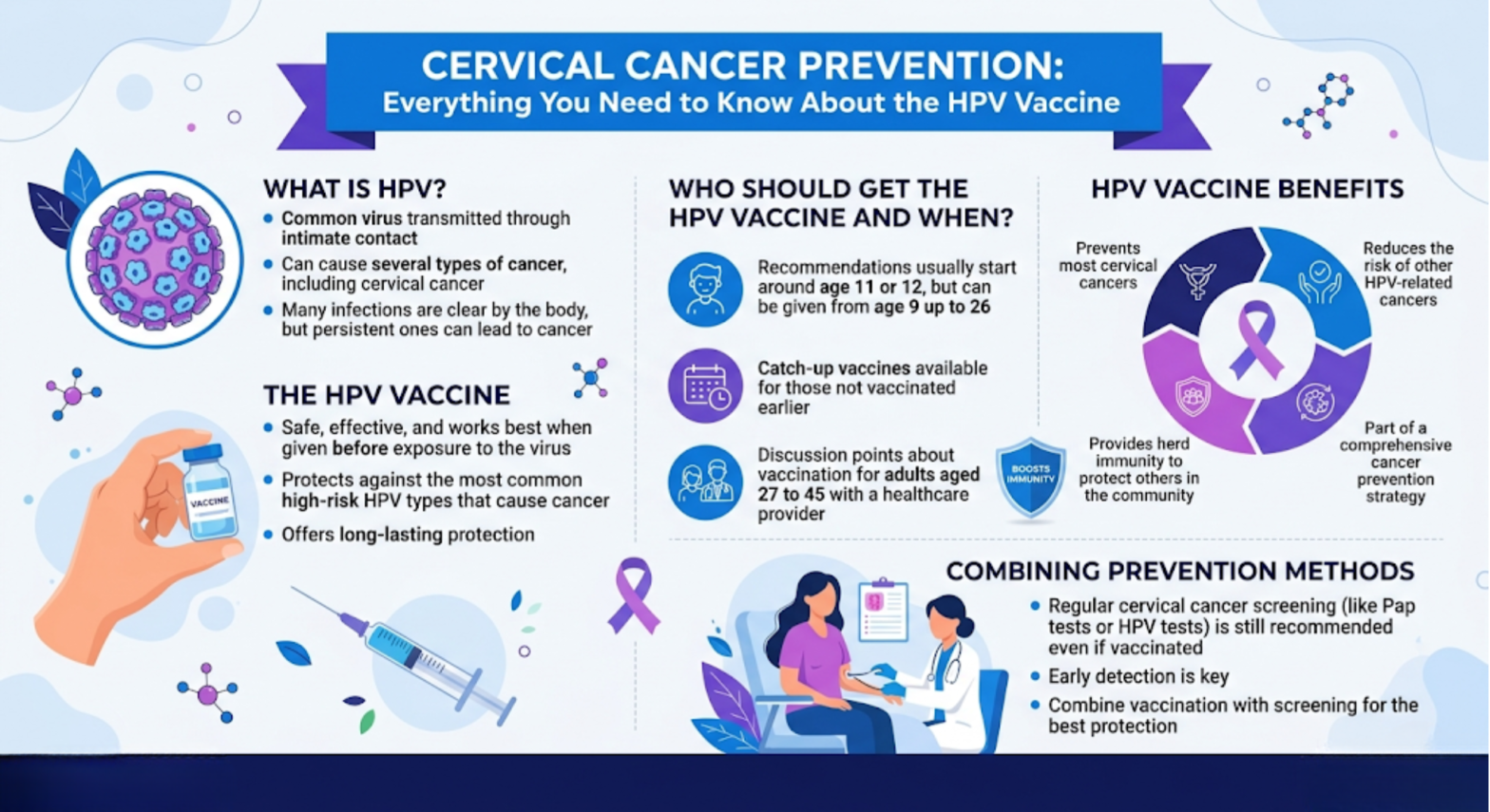
Cervical cancer is one of the most preventable forms of cancer—and yet it continues to affect thousands of women every year. The good news? With the HPV (Human Papillomavirus) vaccine, we now have a powerful tool to stop it before it starts.
In this guide, we’ll break down everything you need to know about the cervical cancer vaccine, including who should get it, how it works, safety, and why it matters more than ever today.
What is HPV and How Does It Cause Cervical Cancer?
HPV (Human Papillomavirus) is a very common virus that spreads through skin-to-skin contact. While many HPV infections go away on their own, certain high-risk strains can lead to:
- Cervical cancer
- Genital warts
- Other cancers (throat, anal, etc.)
Persistent HPV infection is responsible for nearly all cases of cervical cancer—which is why prevention through vaccination is so important.
What is the HPV Vaccine?
The HPV vaccine is designed to protect against the most dangerous strains of HPV that cause cervical cancer and other diseases.
Key Benefits:
- Prevents most cervical cancer cases
- Protects against high-risk HPV strains
- Safe, tested, and globally recommended
- Long-lasting immunity
Who Should Get the HPV Vaccine?
👧 Age 9–14 (Best Time)
- 2 doses only
- Strongest immune response
- Ideal age for maximum protection
👩 Age 15–45
- 3 doses recommended
- Still highly effective even if started later
👉 Both girls and women can benefit from vaccination. Many health experts also recommend it for boys to reduce HPV spread.
HPV Vaccine Dosage Schedule
| Age Group | Number of Doses | Timeline |
| 9–14 years | 2 doses | 6–12 months apart |
| 15–45 years | 3 doses | 0, 2, and 6 months |
Always follow your doctor’s guidance for the exact schedule.
Is the HPV Vaccine Safe?
Yes—extremely safe.
The HPV vaccine has been:
- Approved by global health organizations
- Tested in millions of people worldwide
- Monitored for long-term safety
Common Side Effects:
- Mild soreness at injection site
- Low-grade fever
- Fatigue (rare)
These are temporary and similar to most routine vaccines.
Does the HPV Vaccine Affect Fertility?
No. This is a myth.
There is no scientific evidence linking the HPV vaccine to infertility. In fact, by preventing cervical cancer, it helps protect reproductive health in the long run.
Why HPV Vaccination is Crucial in 2026
- Rising awareness but still low vaccination rates
- Early prevention is far more effective than treatment
- Screening + vaccination = strongest protection
Cervical cancer often develops silently—by the time symptoms appear, it may already be advanced. Vaccination helps stop it before it begins.
Additional Prevention Tips
Even with the vaccine, it’s important to:
- Get regular Pap smears
- Maintain good hygiene
- Practice safe sexual health
- Stay informed and proactive
Frequently Asked Questions (FAQs)
1. Can I take the HPV vaccine if I’m already sexually active?
Yes. Even if you’re sexually active, the vaccine can still protect against strains you haven’t been exposed to.
2. Is the HPV vaccine only for girls?
No. Boys can also get vaccinated to prevent HPV transmission and related cancers.
3. Can adults above 25 take the vaccine?
Yes. Individuals up to age 45 can receive it after consulting a doctor.
4. Do I still need screening after vaccination?
Yes. Regular cervical screening (Pap smear) is still important for complete protection.
5. How long does the vaccine protection last?
Current research shows long-lasting protection (10+ years), with no need for boosters yet.
6. Is the HPV vaccine painful?
Only mild discomfort—similar to any routine injection.
Cervical cancer is preventable—and the HPV vaccine is one of the most powerful tools we have today. Early action can save lives.
Don’t wait for symptoms. Take control of your health today.
👉 If you are between 9–45 years old, or have daughters in this age group:
Consult your doctor about the HPV vaccine now.
👉 Share this information with friends and family—awareness can save lives.
Prevention is better than cure. Protect today for a healthier tomorrow.


