Does Biopsy or Cancer Surgery Spread Cancer? Understanding the Truth Behind Common Myths
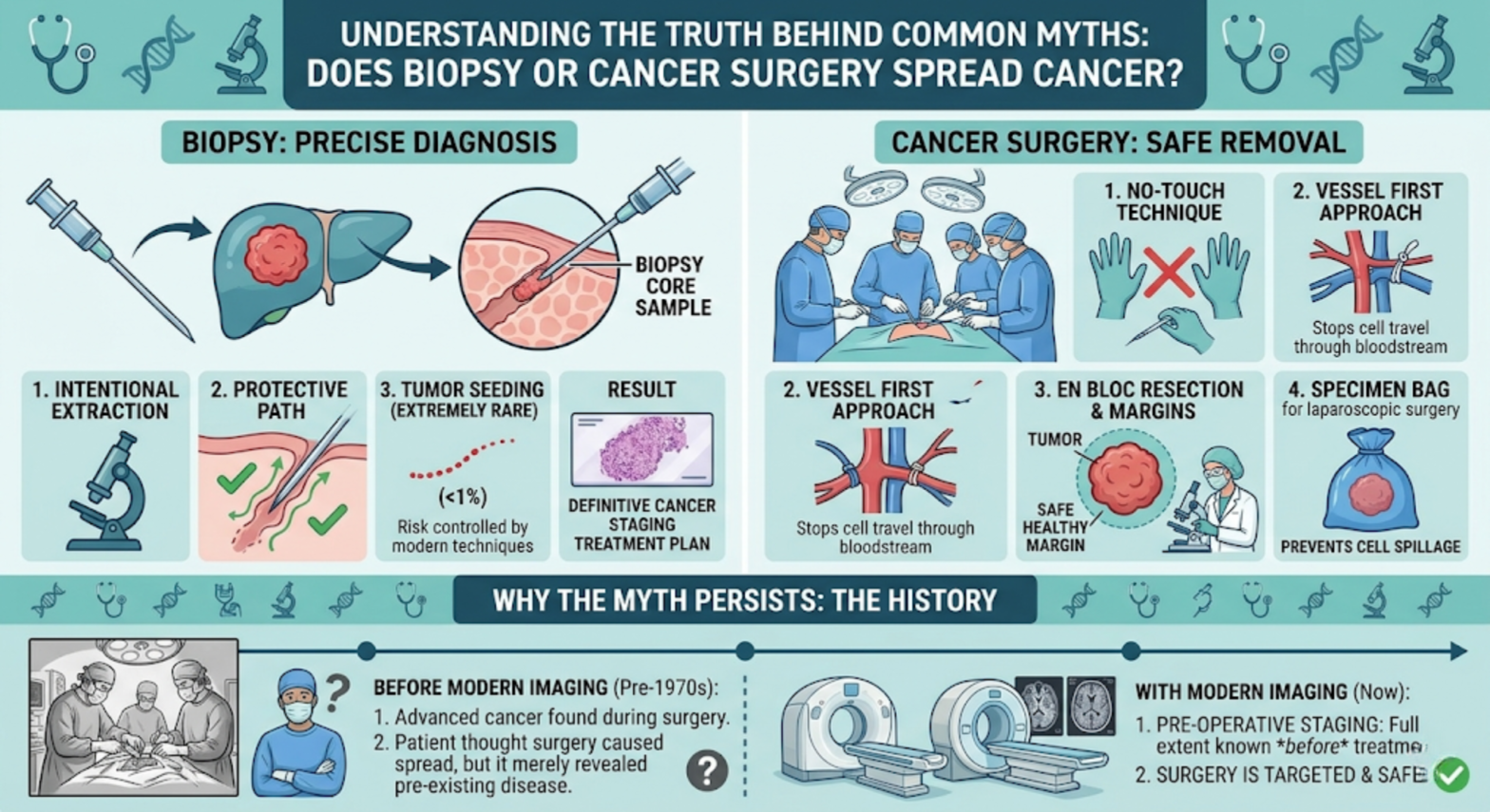
A cancer diagnosis can bring fear, confusion, and many questions. One of the most common concerns patients and families have is:
“Can a biopsy make cancer spread?”
“Does surgery cause cancer to spread faster?”
These myths often create unnecessary fear and may delay essential medical treatment. The truth is that biopsy and cancer surgery are important medical procedures that help doctors diagnose cancer accurately and provide the best possible treatment plan.
In this article, Dr. Shivam Vatsal Agarwal, Director & Head – Surgical Oncology & Robotic Surgery, explains the facts behind cancer biopsy and surgery and why timely treatment can improve outcomes.
What Is a Cancer Biopsy?
A biopsy is a medical procedure in which doctors remove a small sample of tissue from a suspicious area to examine it under a microscope.
The biopsy helps doctors determine:
- Whether a growth is cancerous or non-cancerous
- The exact type of cancer
- The grade and characteristics of cancer cells
- The most suitable treatment approach
A biopsy is considered the gold standard for confirming a cancer diagnosis.
Without a biopsy, doctors may not be able to differentiate cancer from other conditions such as infections, inflammation, or diseases like tuberculosis.
Myth: Does a Biopsy Cause Cancer to Spread?
Fact: A Properly Performed Biopsy Does Not Spread Cancer
Many people avoid biopsies because they believe disturbing a tumor will make cancer spread. This is a common misconception.
Modern medical techniques follow strict guidelines to safely perform biopsies. Cancer specialists carefully select:
- The biopsy method
- The safest route to access the tumor
- Proper handling of tissue samples
The information gained from a biopsy is extremely valuable because it allows doctors to choose the right treatment.
Delaying a biopsy because of fear can sometimes allow a disease to progress without proper diagnosis.
Why Is a Biopsy Important Before Cancer Treatment?
Cancer treatment depends on knowing exactly what type of cancer a patient has.
For example, a lump or abnormal growth could be:
- Cancer
- Benign tumor
- Infection
- Tuberculosis
- Inflammatory condition
Treating without confirmation may lead to incorrect therapy.
A biopsy provides the medical team with accurate information to create a personalized treatment plan.
Myth: Does Cancer Surgery Make Cancer Spread?
Fact: Cancer Surgery Helps Remove Cancer and Can Be Curative
Another common fear is that surgery may spread cancer throughout the body.
The reality is that cancer surgery is one of the most effective treatments for early-stage cancers.
For many cancers diagnosed at:
- Stage 1
- Stage 2
surgery can completely remove the tumor and offer the possibility of a cure.
Cancer surgeons use advanced surgical principles to remove the tumor along with an appropriate margin of healthy tissue to reduce the chance of recurrence.
How Does Cancer Surgery Help Patients?
Cancer surgery may:
✅ Remove the primary tumor
✅ Prevent further local growth
✅ Help achieve long-term disease control
✅ Improve survival chances
✅ Provide additional information about cancer stage through pathology testing
With advancements such as robotic and minimally invasive surgery, many patients can benefit from:
- Smaller incisions
- Faster recovery
- Reduced pain
- Better precision
Why Early Diagnosis and Treatment Matter
Cancer outcomes are strongly influenced by the stage at which the disease is detected.
Early diagnosis allows doctors to:
- Start treatment sooner
- Choose the most effective therapy
- Increase chances of successful outcomes
Ignoring symptoms or delaying medical evaluation because of myths can sometimes make treatment more difficult.
Common Cancer Myths vs Medical Facts
| Cancer Myth | Medical Fact |
| Biopsy spreads cancer | Biopsy helps confirm diagnosis safely |
| Surgery wakes up cancer | Surgery removes cancer and may cure early-stage disease |
| Cancer should not be touched | Proper medical treatment is necessary |
| Waiting is safer than treatment | Early evaluation improves treatment options |
When Should You Consult a Cancer Specialist?
You should seek medical advice if you notice:
- A lump or swelling that persists
- Unexplained weight loss
- Blood in stool, urine, or cough
- Persistent pain without a clear reason
- Changes in bowel or bladder habits
- Unusual bleeding
- Non-healing ulcers
Early consultation can help identify problems before they become advanced.
Frequently Asked Questions (FAQs)
1. Does a biopsy increase the risk of cancer spreading?
No. A properly performed biopsy by trained medical professionals does not cause cancer to spread. It provides essential information needed for accurate diagnosis and treatment planning.
2. Why is biopsy needed before cancer treatment?
A biopsy confirms whether cancer is present and identifies the exact cancer type, helping doctors select the most effective treatment.
3. Can cancer be cured with surgery?
Yes. For many early-stage cancers, especially Stage 1 and Stage 2 cancers, surgery can remove the disease completely and may provide a chance of cure.
4. Is surgery safe for cancer patients?
Cancer surgery performed by experienced surgical oncologists is a standard and effective treatment option. The approach depends on the cancer type, stage, and patient’s overall health.
5. What happens if someone delays a biopsy because of fear?
Delaying diagnosis may postpone necessary treatment. Early detection often provides more treatment options and better outcomes.
6. Does every lump mean cancer?
No. Many lumps are caused by non-cancerous conditions. A medical evaluation and appropriate tests are needed to determine the cause.
Final Message: Trust Medical Facts, Not Cancer Myths
Fear and misinformation can prevent patients from receiving timely care. A biopsy is not an enemy—it is a powerful diagnostic tool. Cancer surgery is not a cause of spread—it is an important treatment option that saves lives.
If you or your loved one has concerns about a suspicious growth, cancer diagnosis, biopsy, or surgery, consult an experienced cancer specialist for accurate guidance.
Consult Dr. Shivam Vatsal Agarwal – Surgical Oncology & Robotic Surgery
For expert advice regarding cancer diagnosis, biopsy, and advanced cancer treatment:
Dr. Shivam Vatsal Agarwal
Director & Head – Surgical Oncology & Robotic Surgery
📍 Metro Cancer Institute, Metro Hospital, Sector 16, Faridabad (NCR) – 121002, India
📞 Phone: +91-99688 56411
📧 Email: shivamvatsal@gmail.com
🌐 Website: www.drshivamvatsal.com
Book your consultation today and get evidence-based cancer care from an experienced surgical oncology specialist.


