Comprehensive Lung Cancer Care in Faridabad & Delhi NCR: Symptoms, Diagnosis, Treatment & Expert Guidance
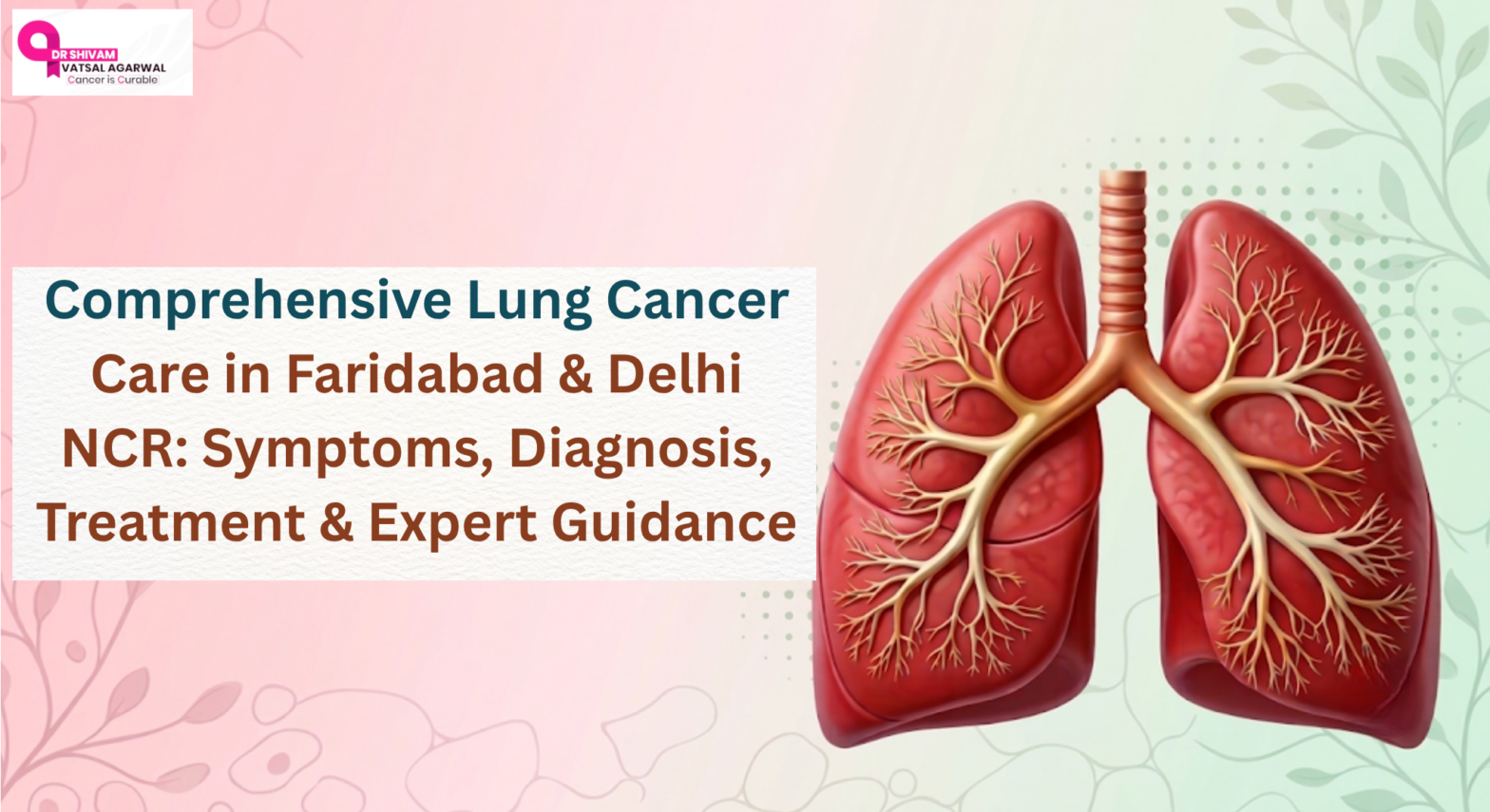
Lung cancer is a condition that can affect much more than your breathing. It can influence your energy levels, everyday activities, emotional well-being, and the lives of your family members. Hearing the words “lung cancer” can feel frightening, but understanding the condition and knowing where to seek medical help can make the next steps easier.
If you or someone in your family experiences a persistent cough, chest discomfort, breathing difficulties, or unexplained weight loss, these changes should not be ignored. Although these symptoms do not necessarily indicate lung cancer, getting the right medical evaluation can help identify their underlying cause.
For patients looking for lung cancer treatment in Faridabad and Delhi NCR, timely consultation, accurate diagnosis, and an appropriate treatment plan are essential parts of the care journey.
At Metro Cancer Institute Hospital, Faridabad, patients can seek consultation with Dr. Shivam Vatsal Agarwal for guidance regarding their cancer care needs.
What Is Lung Cancer?
Lung cancer develops when abnormal cells in the lungs begin growing uncontrollably. Over time, these cells can form a tumour, affect surrounding tissues, and sometimes spread to other parts of the body.
Think of healthy cells as members of a well-organised team. They grow, perform their functions, and get replaced when necessary. Lung cancer develops when certain cells stop following these normal instructions and continue multiplying without control.
There are two main types of lung cancer:
- Non-Small Cell Lung Cancer (NSCLC): This is the most common type, accounting for approximately 85% of lung cancer cases. It includes adenocarcinoma, squamous cell carcinoma, and large cell carcinoma.
- Small Cell Lung Cancer (SCLC): This is a less common type that generally grows and spreads more quickly than NSCLC.
Identifying the type of lung cancer is important because different cancers may respond differently to treatment.
What Are the Early Warning Signs of Lung Cancer?
One of the biggest challenges with lung cancer is that early symptoms may be mild or sometimes completely absent. Some people initially mistake these symptoms for respiratory infections, allergies, or ordinary breathing problems.
However, certain warning signs deserve attention.
Common lung cancer symptoms include:
- A persistent cough that does not improve.
- Coughing up blood or blood-stained mucus.
- Chest pain, especially while coughing or breathing.
- Shortness of breath during everyday activities.
- Changes in normal breathing patterns.
- Frequent chest infections, including repeated pneumonia.
- Unexplained weight loss.
- Persistent tiredness or weakness.
- Hoarseness or changes in the voice.
When Should You Consult a Doctor?
If a cough continues for more than three weeks, keeps getting worse, or occurs alongside unexplained weight loss or chest discomfort, you should arrange a medical evaluation.
Coughing up blood requires prompt medical assessment. Severe breathing difficulty or sudden, serious chest pain needs emergency attention.
Remember that these symptoms can have several causes. Experiencing them does not automatically mean you have lung cancer, but identifying the underlying reason is important.
Why Does Lung Cancer Develop?
Smoking is one of the major risk factors for lung cancer, but it is not the only one. People who have never smoked can also develop this condition.
Some recognised risk factors include:
- Tobacco Smoking: Cigarettes and other tobacco products expose lung tissues to harmful chemicals that can damage cells over time.
- Passive Smoking: Regular exposure to another person’s tobacco smoke can also increase the risk of lung cancer.
- Air Pollution: Long-term exposure to polluted air and harmful airborne particles is another recognised risk factor, particularly relevant in urban environments.
- Workplace Exposure: Certain occupational substances, including asbestos, silica, and diesel exhaust, can increase lung cancer risk.
- Family History: Having close family members with lung cancer may be relevant when assessing an individual’s risk.
- Previous Lung Conditions: Certain chronic lung diseases may be associated with an increased risk.
It is important to understand that having a risk factor does not mean you will definitely develop lung cancer. Similarly, having no known risk factors does not completely eliminate the possibility.
How Is Lung Cancer Diagnosed?
An accurate diagnosis is the foundation of effective lung cancer treatment. Doctors use a combination of medical history, imaging investigations, laboratory tests, and tissue examination to understand what is happening inside the lungs.
Here is how the diagnostic process may proceed.
1. Medical Examination
The doctor reviews your symptoms, smoking history, previous illnesses, family history, and overall health. This information helps determine which investigations may be required.
2. Imaging Tests
Imaging tests allow doctors to examine the lungs and identify suspicious areas.
Common investigations include:
- Chest X-ray: May reveal shadows or suspicious changes in the lungs.
- CT Scan: Provides detailed cross-sectional images of the lungs and surrounding tissues.
- PET-CT Scan: Helps identify areas of increased metabolic activity and assess whether cancer may have spread.
- MRI: May be used to examine specific areas, such as the brain, when clinically necessary.
3. Biopsy
A biopsy involves collecting a small tissue sample from a suspicious area. The sample is examined under a microscope to confirm whether cancer cells are present and identify the type of lung cancer.
4. Molecular and Biomarker Testing
Some lung cancers contain specific genetic changes or protein markers. Molecular and biomarker testing helps identify these changes and allows doctors to determine whether targeted therapy or immunotherapy may be suitable.
Not every patient requires every investigation. The diagnostic plan depends on the symptoms, initial findings, and individual medical condition.
What Are the Treatment Options for Lung Cancer?
There is no single treatment that works for every lung cancer patient. The most appropriate approach depends on several factors, including the type of lung cancer, its stage, molecular profile, tumour location, and the patient’s overall health.
Modern cancer care offers several treatment options.
1. Lung Cancer Surgery
Surgery may be recommended when lung cancer is localised and the patient is medically fit for an operation.
Depending on the condition, surgeons may remove a small portion of the lung, an entire lobe, or, in selected cases, the whole lung.
2. Chemotherapy
Chemotherapy uses medicines to kill cancer cells or slow their growth. It may be recommended before surgery, after surgery, or as part of treatment for advanced lung cancer.
3. Radiation Therapy
Radiation therapy uses focused, high-energy radiation to damage cancer cells and control tumour growth.
It may be used as the main treatment for certain patients or combined with chemotherapy, surgery, or other treatment approaches.
4. Targeted Therapy
Targeted therapy uses specialised medicines that act on specific genetic changes or proteins responsible for cancer cell growth.
These medicines may be suitable for patients whose tumour testing identifies a matching target.
5. Immunotherapy
Immunotherapy helps the body’s immune system recognise and fight cancer cells.
It may be recommended depending on the type of lung cancer, biomarker results, disease stage, and overall treatment plan.
In some cases, doctors combine two or more treatment approaches to achieve better disease control. The expected benefits, possible side effects, and treatment outcomes should be discussed before starting therapy.
Why Is Early Lung Cancer Evaluation Important?
Early evaluation plays an important role in lung cancer care because it helps doctors identify the condition, understand its stage, and consider appropriate treatment options.
According to the World Health Organization’s Global Cancer Observatory, India reported 81,748 lung cancer cases in 2022. This highlights the importance of awareness, timely medical evaluation, and access to appropriate cancer care.
Although early diagnosis does not guarantee a particular treatment outcome, it can widen the range of treatment options available to eligible patients.
If you experience persistent breathing symptoms, avoid relying only on home remedies or repeatedly taking cough medicines without identifying the underlying cause. A timely medical consultation can help clarify what is happening.
Meet the Expert: Dr. Shivam Vatsal Agarwal
When dealing with a serious condition such as lung cancer, choosing the right medical guidance is an important decision. Patients and their families need clear communication, reliable information, and a treatment approach that considers their individual circumstances.
Dr. Shivam Vatsal Agarwal is associated with Metro Cancer Institute Hospital, Faridabad.
During a consultation, patients should discuss their diagnosis, available treatment options, expected benefits, possible side effects, and follow-up requirements. Understanding these aspects can help patients and their families make informed decisions about their care.
What Does the Lung Cancer Treatment Journey Look Like?
Lung cancer treatment is not usually a one-visit process. It involves several steps, including medical evaluation, diagnosis, treatment planning, therapy, and regular follow-up.
The typical treatment journey may include:
Step 1: Consultation
Discuss symptoms, medical history, previous reports, and personal concerns with the doctor.
Step 2: Diagnosis
Complete the recommended scans, biopsy, and other investigations to confirm the diagnosis.
Step 3: Treatment Planning
Understand the cancer type, stage, and available treatment options before deciding on the appropriate approach.
Step 4: Treatment
Begin the recommended treatment, which may include surgery, chemotherapy, radiation therapy, targeted therapy, immunotherapy, or a combination of these.
Step 5: Follow-up
Attend regular appointments to monitor recovery, treatment response, possible side effects, and overall health.
The duration of the treatment journey varies from patient to patient. Your doctor will explain the expected schedule based on your diagnosis and individual treatment plan.
Frequently Asked Questions About Lung Cancer Treatment
1. What Are the First Warning Signs of Lung Cancer?
A persistent cough, chest pain, unexplained weight loss, shortness of breath, and coughing up blood may be warning signs of lung cancer. Some people may not experience noticeable symptoms in the early stages, making medical evaluation important when concerns arise.
2. Can a Person Develop Lung Cancer Without Smoking?
Yes. People who have never smoked can also develop lung cancer. Factors such as air pollution, second-hand smoke, workplace exposure to harmful chemicals, family history, and other environmental influences may contribute to the risk.
3. Is Lung Cancer Treatable?
Yes, lung cancer can be treated. The choice of treatment depends on the cancer type, stage, overall health, and other medical factors. Treatment options may include surgery, chemotherapy, radiation therapy, targeted medicines, and immunotherapy. Outcomes vary from person to person.
4. Which Tests Are Required to Diagnose Lung Cancer?
Doctors may recommend a chest X-ray, CT scan, PET-CT scan, bronchoscopy, biopsy, and molecular testing to diagnose and assess lung cancer. The specific investigations depend on the patient’s symptoms and initial findings.
5. What Is the Difference Between Chemotherapy and Immunotherapy?
Chemotherapy uses medicines to kill cancer cells or slow their growth. Immunotherapy helps the body’s immune system recognise and fight cancer cells. The appropriate treatment depends on the cancer type, stage, and relevant test results.
6. Where Can I Consult a Lung Cancer Doctor in Faridabad?
Patients looking for lung cancer consultation in Faridabad can contact Metro Cancer Institute Hospital, Sector 16A, and enquire about an appointment with Dr. Shivam Vatsal Agarwal.
Get Expert Guidance for Lung Cancer Care in Faridabad & Delhi NCR
A lung cancer diagnosis can bring many questions and concerns for patients and their families. Whether you are experiencing persistent breathing problems or have already been diagnosed with lung cancer, seeking appropriate medical guidance is an important step.
At Metro Cancer Institute Hospital, Faridabad, patients can enquire about consultation, diagnostic evaluation, and treatment planning based on their medical needs.
Understanding your condition, discussing available treatment options, and following an appropriate care plan can help you approach the treatment journey with greater clarity.
Hospital Contact Details
Hospital Name: Metro Cancer Institute Hospital
Doctor: Dr. Shivam Vatsal Agarwal
Address: Ground Floor, Metro Cancer Institute Hospital, Nirman Kunj ADB PWD Colony, Sector 16A, Faridabad, Haryana – 121002.
Phone: 099688 56411


