Pheochromocytoma Treatment in Faridabad and Delhi NCR: Causes, Symptoms, Diagnosis, and Treatment
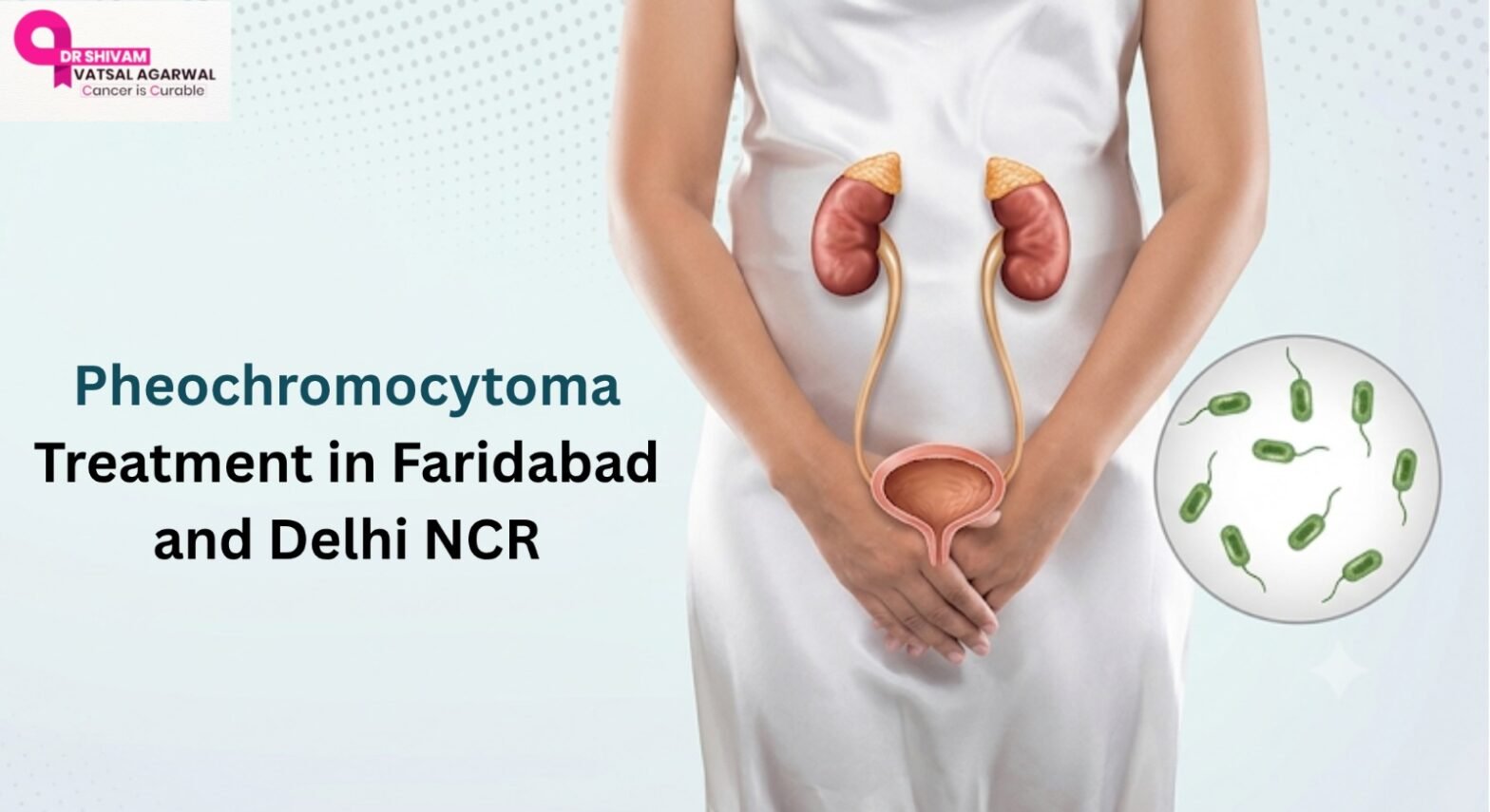
Sudden spikes in blood pressure, a racing heartbeat, severe headaches, excessive sweating, or unexplained shaking can understandably be worrying. These symptoms can happen because of many different health conditions. In rare cases, however, they may be linked to a hormone-producing tumor called pheochromocytoma.
Pheochromocytoma is an uncommon tumor that usually develops in the adrenal glands, which are located above the kidneys. These tumors can produce excessive amounts of hormones such as adrenaline and noradrenaline, which can significantly affect blood pressure, heart rate, and other body functions.
The good news is that pheochromocytoma can often be treated effectively when diagnosed appropriately. In many cases, surgery to remove the tumour is the main treatment, supported by careful medication and preparation before the procedure.
If you are looking for pheochromocytoma treatment in Faridabad or Delhi NCR, understanding the causes, symptoms, diagnosis, and treatment options can help you know what to expect during your consultation.
What Is Pheochromocytoma?
Pheochromocytoma is a rare tumor that develops from specialized cells called chromaffin cells, most commonly in the medulla, or inner part, of the adrenal gland.
The adrenal glands produce several important hormones. These include catecholamines such as
- Adrenaline
- Noradrenaline
- Dopamine in some cases
These hormones help the body respond to stress. They can increase heart rate, raise blood pressure, and prepare the body for a “fight-or-flight” response.
A pheochromocytoma can release excessive amounts of these hormones, sometimes in sudden episodes. This can result in symptoms such as rapid heartbeat, sweating, headaches, and sudden increases in blood pressure.
What Causes Pheochromocytoma?
The exact cause of every pheochromocytoma is not always known. However, genetic factors can play an important role.
Some pheochromocytomas are associated with inherited conditions, including:
- Multiple Endocrine Neoplasia type 2 (MEN2)
- Von Hippel-Lindau (VHL) syndrome
- Neurofibromatosis type 1 (NF1)
- Hereditary paraganglioma syndromes
- Other inherited genetic changes
According to the National Cancer Institute, a significant proportion of pheochromocytomas and related tumours are associated with inherited genetic conditions.
For this reason, doctors may ask about your personal and family medical history after a diagnosis. Genetic counselling and testing may be considered depending on factors such as age, family history, tumor characteristics, and other clinical findings.
Symptoms of Pheochromocytoma
Pheochromocytoma symptoms can vary from person to person. Some people experience sudden attacks, while others may have persistent or less obvious symptoms.
Common symptoms include:
- Sudden or difficult-to-control high blood pressure
- Severe or recurring headaches
- Rapid or forceful heartbeat
- Palpitations or irregular heartbeat
- Excessive sweating
- Shaking or tremors
- Pale skin
- Nervousness or a feeling of anxiety
- Dizziness
- Weakness
- Episodes of feeling unusually hot or cold
These symptoms may occur in short attacks that then disappear.
Importantly, having these symptoms does not necessarily mean that you have pheochromocytoma. Many more common conditions can cause similar symptoms. Proper medical evaluation and testing are therefore important.
How Is Pheochromocytoma Diagnosed?
Diagnosing pheochromocytoma generally involves a combination of hormone testing and imaging.
Finding an adrenal mass on a scan does not automatically mean that it is a pheochromocytoma. Doctors usually need to determine whether the tumour is producing excess hormones and then assess its location and characteristics.
1. Blood and Urine Tests
Doctors may recommend blood or urine tests to look for elevated levels of catecholamines or their breakdown products.
One commonly used approach is testing for metanephrines, which can be measured in blood or urine.
Depending on the situation, a doctor may recommend:
- Plasma free metanephrines
- 24-hour urinary fractionated metanephrines
- Other hormone-related tests when clinically appropriate
The results need to be interpreted alongside symptoms, medications, medical history, and other clinical information.
2. Imaging Tests
Once biochemical testing suggests pheochromocytoma, imaging can help locate the tumour and assess its size and characteristics.
Depending on the individual case, doctors may use:
- CT scan
- MRI
- PET or other functional imaging in selected situations
The choice of imaging depends on the patient’s clinical condition, suspected tumour location, previous test results, and what the treating team needs to determine.
3. Genetic Evaluation
Because some pheochromocytomas are associated with inherited conditions, genetic counselling may be recommended for selected patients.
Genetic evaluation can be particularly relevant when there is:
- A family history of related tumors
- A young age at diagnosis
- Multiple tumors
- Tumors affecting both adrenal glands
- Certain tumor characteristics
- Other features suggesting an inherited syndrome
If an inherited condition is identified, family members may also be advised to discuss appropriate screening or genetic testing with a specialist.
How Is Pheochromocytoma Treated?
For many patients with a localised pheochromocytoma, surgical removal of the tumour is the main treatment.
However, pheochromocytoma surgery requires careful preparation. The tumour can release large amounts of hormones during manipulation, which can cause dangerous changes in blood pressure and heart rate.
Therefore, treatment generally involves controlling the hormone effects before surgery and carefully managing the patient during and after the procedure.
Medication Before Surgery
Doctors commonly use medicines to control the effects of excessive catecholamines before surgery.
Alpha-blockers are commonly used to control blood pressure and reduce the effects of excessive adrenaline-like hormones.
In some patients, beta-blockers may also be prescribed to help control a rapid heart rate. Importantly, beta-blockers are generally introduced only after adequate alpha-blockade when both are needed.
The exact medication plan, dosage, and duration depend on the patient’s blood pressure, heart rate, overall health, and response to treatment.
Surgery: Adrenalectomy
The surgical removal of an adrenal gland is called an adrenalectomy.
For selected localized tumors, minimally invasive surgery may be possible. Depending on the tumor’s size, location, appearance, and other factors, the operation may be performed using laparoscopic or robotic techniques.
In other cases, an open surgical approach may be recommended.
The surgical plan depends on factors such as
- Tumor size
- Tumor location
- Whether the tumor has invaded surrounding structures
- Whether there are multiple tumors
- Whether the disease has spread
- Previous abdominal surgery
- The patient’s overall health
The treatment approach should therefore be individualized rather than based on tumor size alone.
Treatment for Advanced or Recurrent Pheochromocytoma
Not every pheochromocytoma is confined to the adrenal gland.
If the tumor has spread, returned after treatment, or cannot be completely removed with surgery, the treatment strategy may be more complex.
Depending on the individual situation, treatment may include:
- Surgery
- Radiation-based treatment
- Systemic medicines
- Radiopharmaceutical therapies in selected cases
- Other specialized treatments
A multidisciplinary team may be involved when the disease is advanced or requires more than one form of treatment.
Pheochromocytoma Treatment: What Does the Process Look Like?
| Stage | What Usually Happens |
| 1. Consultation | Symptoms, blood pressure history, medical records, medications, and family history are reviewed. |
| 2. Hormone Testing | Blood and/or urine tests may be performed to assess catecholamine-related hormones. |
| 3. Imaging | CT, MRI, or other imaging may be used to locate and evaluate the tumor. |
| 4. Pre-Surgery Preparation | Medicines may be prescribed to control blood pressure and hormone effects. |
| 5. Surgery | When appropriate, the tumor and sometimes the affected adrenal gland are surgically removed. |
| 6. Follow-Up | Hormone testing and imaging may be recommended to monitor treatment and check for recurrence. |
The exact process and timeline vary from patient to patient.
Why Follow-Up Is Important
Treatment does not necessarily end after surgery.
Depending on the individual case, doctors may recommend long-term monitoring with hormone tests, blood pressure checks, imaging, or other assessments.
Follow-up is important because pheochromocytoma can recur in some patients, and people with hereditary forms may have an increased risk of developing related tumors.
Your doctor will determine the appropriate follow-up schedule based on the tumor’s characteristics, genetic findings, treatment, and overall health.
Meet the Expert: Dr. Shivam Vatsal Agarwal
Dr. Shivam Vatsal Agarwal is Director and Head of Surgical Oncology and Robotic Surgery (Unit-II) at Metro Cancer Institute, Faridabad.
His professional background includes training at AIIMS, New Delhi, along with fellowship training in laparoscopic and robotic oncology.
His areas of clinical focus include complex cancer conditions involving different parts of the body, with an emphasis on appropriate diagnosis, treatment planning, and surgical care.
For uncommon tumors such as pheochromocytoma, careful evaluation is important before deciding on treatment. Understanding the tumor’s hormone activity, location, extent, and the patient’s overall health can help the treating team develop an appropriate management plan.
When Should You See a Doctor?
You should consider consulting a doctor if you repeatedly experience:
- Sudden episodes of high blood pressure
- Severe or recurring headaches
- Racing or pounding heartbeat without an obvious reason
- Excessive sweating
- Shaking or tremors
- Episodes of dizziness or weakness
These symptoms do not automatically indicate pheochromocytoma. However, if they keep recurring, especially in sudden attacks, medical evaluation can help identify the underlying cause.
Trying to diagnose the condition based only on symptoms is not recommended. Proper testing is needed to determine whether pheochromocytoma or another health condition is responsible.
Frequently Asked Questions About Pheochromocytoma
1. What is the treatment for pheochromocytoma?
For a localized pheochromocytoma, treatment usually involves careful medical preparation followed by surgery to remove the tumor. Medicines are commonly used before surgery to control blood pressure and reduce the effects of excess hormones. Advanced or recurrent disease may require additional treatments.
2. Can pheochromocytoma cause high blood pressure?
Yes. Excess catecholamines released by pheochromocytoma can cause high blood pressure. Blood pressure may sometimes rise suddenly and may be difficult to control.
3. Is pheochromocytoma cancer?
Pheochromocytoma is not automatically considered cancerous simply because it is a tumour. Doctors assess factors such as whether the tumor has spread to other parts of the body and its overall clinical behavior when determining whether it is malignant.
4. What tests are needed for pheochromocytoma?
Doctors commonly use blood or urine tests to check for metanephrines and other catecholamine-related markers. A CT or MRI may then be used to locate the tumor. Additional functional imaging may be considered in selected cases.
5. Can pheochromocytoma be inherited?
Yes. Some pheochromocytomas are associated with inherited genetic conditions. Depending on factors such as age, family history, tumor characteristics, and other clinical findings, genetic counseling and testing may be recommended.
6. Is surgery the main treatment for pheochromocytoma?
For many patients with localized pheochromocytoma, surgery is the main treatment. However, the approach depends on the tumor’s location, size, spread, recurrence, and the patient’s overall condition. Advanced disease may require additional treatments.
Get Expert Evaluation for Pheochromocytoma in Faridabad
A rare condition can feel overwhelming, especially when symptoms such as sudden blood pressure changes, headaches, sweating, or palpitations keep returning.
The first step is not to assume the cause but to get an appropriate medical evaluation. If pheochromocytoma is suspected, hormone testing, imaging, and specialist assessment can help establish the diagnosis and determine the appropriate treatment approach.
If you are looking for pheochromocytoma treatment in Faridabad or Delhi NCR, consult a qualified specialist for an evaluation based on your symptoms, test results, and individual medical history.
Dr. Shivam Vatsal Agarwal
Address:
Ground Floor, Metro Cancer Institute Hospital
Nirman Kunj, ADB PWD Colony, Sector 16A
Faridabad, Haryana – 121002
Phone: 99688 56411


